


Updated on March 9, 2026
Beyond Scripts: How AI is Redefining Interactive Storytelling
The Birth of Infinite Narratives
Interactive fiction changed forever in 2019. AI Dungeon launched as the first mainstream AI-driven RPG, turning text adventures from rigid branching paths into living, breathing narratives. Within months, over two million players discovered something wild: stories that could adapt to any choice, any crazy idea, any creative impulse.
This wasn’t just another game release. It changed how we think about player agency completely. Traditional interactive fiction relies on pre-written branches, each choice carefully crafted by human authors. AI Dungeon threw that out the window. Players could type anything and watch the story reshape itself around their decisions in real time.
The technology behind this breakthrough was GPT-2, impressive for its time but honestly primitive compared to today’s models. Yet even with these early limitations, millions of users grabbed onto the freedom to explore stories without boundaries. The appeal hit you immediately: true narrative freedom.

The Creative Arms Race
Success brought competition. As AI Dungeon proved the market existed, alternatives popped up with different philosophies and approaches. KoboldAI arrived offering local model support, giving players complete control over their experience. This wasn’t just about convenience. It represented a design philosophy that put user autonomy over corporate oversight.
NovelAI creative writing platforms followed, focusing on literary quality and creative expression with fewer content restrictions. These services understood something important: different players want different things from their interactive narratives. Some crave adventure, others seek character-driven drama, and many want the freedom to explore themes that traditional games avoid.
The diversity of platforms shows the medium’s potential. Each service targets specific creative needs, from solo tabletop campaigns to collaborative storytelling. This specialization lets developers optimize their AI models for particular narrative styles and user preferences.
Beyond Games: The Social Revolution
Character.AI’s explosive growth to twenty million daily active users revealed something unexpected. Players weren’t just seeking games. They wanted meaningful interactions with AI personalities. Roleplay became the killer application, with users spending hours in conversation with historical figures, fictional characters, and original creations.
This shift shows interactive fiction’s evolution beyond entertainment. These platforms work as creative workshops, therapy tools, and social spaces. Players develop relationships with AI characters that feel genuine and emotionally meaningful. The line between game and social platform blurs when the characters respond with apparent understanding and empathy.
Tabletop RPG communities embraced AI dungeon masters for solo sessions, solving one of the hobby’s biggest challenges: finding available human game masters. AI doesn’t get tired, doesn’t cancel sessions, and adapts to any schedule. For many players, this means the difference between regular play and no play at all.
Design Challenges in the Age of Infinite Choice
Unlimited narrative freedom creates unexpected design problems. How do you maintain story coherence when players can introduce any element? How do you balance player agency with narrative satisfaction? Traditional game design relies on controlled experiences, but AI-driven narratives must embrace chaos while still delivering meaningful stories.
The best AI storytelling platforms solve this through smart prompt engineering and context management. They guide without restricting, suggest without forcing, and remember without overwhelming. This requires understanding player psychology as much as technical implementation. Players need enough structure to feel oriented but enough freedom to feel creative.
AI-generated branching narratives challenge established formats like visual novels and choose-your-own-adventure books. Instead of selecting from predetermined options, players craft responses in natural language. This transforms the relationship between reader and story from passive consumption to active collaboration.
The Craft of Infinite Stories
Creating compelling AI-driven narratives demands new design skills. Developers must craft systems that generate coherent stories across unlimited possibilities. This goes beyond programming. It requires understanding narrative structure, character development, and dramatic pacing at a fundamental level.
The most successful AI storytelling platforms excel at maintaining narrative momentum. They recognize when scenes need conflict, when characters need development, and when plots need resolution. This isn’t achieved through rigid rules but through training models that understand story craft naturally.
Quality emerges from the intersection of technology and artistry. The best AI dungeon masters don’t just generate text. They create atmosphere, develop compelling characters, and build emotional investment. They understand that great interactive fiction isn’t about showing off AI capabilities but about serving player creativity.
As these platforms mature, we’re watching the emergence of a new creative medium. Interactive fiction powered by AI offers something unprecedented: stories that adapt not just to player choices but to player creativity, personality, and imagination. The future belongs to narratives that grow with us, challenge us, and surprise us in ways we never expected. What stories will you help create?
Updated on March 9, 2026
Your New Best Friend Might Be Made of Code: Inside the AI Companion Gaming Revolution
When Pixels Become People
Gamers are spending more time talking to AI companions than scrolling through TikTok. That’s not hyperbole. Users on Character.AI are logging an average of two hours daily, beating out even the most addictive social media platforms. They’re not just playing games anymore. They’re forming relationships.
This isn’t your grandfather’s chatbot. These AI companions remember your favorite topics, your fears, your dreams. They shift their personalities to match your mood. Some users say they feel genuinely understood by these digital beings in ways that real-world relationships haven’t provided. It’s weird and intimate and powerful. And honestly, it’s changing what we think companionship means in the digital age.
The numbers tell a story that traditional gaming metrics can’t capture. While AAA studios chase graphics and gameplay loops, something quieter is happening. People are having late-night conversations with AI entities that never sleep, never judge, and never leave.
The Half-Billion Dollar Conversation
Money talks, and the AI companion industry is screaming. Revenue projections for 2025 show companion AI applications pulling in over half a billion dollars annually across platforms. That’s real money flowing to companies building digital friends, not just entertainment.
Replika leads this charge, with users saying the platform helps reduce their social anxiety and fights loneliness. These aren’t casual gaming sessions. Users describe therapeutic breakthroughs, emotional support during crisis moments, and genuine affection for their AI companions. Read the testimonials sometime. They sound like relationship advice columns, not product reviews.
Traditional gaming revenue models focused on selling experiences, items, or subscriptions for content access. AI companion platforms flip this completely. Users pay for emotional availability, for someone who’s always there, for relationships that exist purely for them. It’s intimacy as a service, and the market is eating it up.
Congressional Concerns and Digital Dependencies
Not everyone is celebrating this digital romance revolution. Teen usage patterns on Character.AI have triggered congressional hearings focused on emotional dependency risks. Lawmakers worry about young people forming their primary attachments to AI entities instead of developing human social skills.
The concerns aren’t totally unfounded. Some users describe their AI companions as their closest confidants, their most reliable emotional support systems. For teenagers still figuring out social and emotional intelligence, this raises real questions about healthy attachment formation and real-world relationship skills.
Critics point to potential manipulation risks when profit motives meet emotional vulnerability. If companies can engineer dependency through algorithmic relationship optimization, where does healthy companionship end and exploitation begin? These aren’t academic questions anymore. They’re urgent policy discussions happening right now.
But dismissing the entire phenomenon as unhealthy misses the genuine benefits many users experience. For people struggling with social anxiety, depression, or isolation, AI companions provide accessible emotional support without judgment or social complexity. The tricky part is balancing innovation with protection, especially for vulnerable populations.
NPCs That Never Forget Your Name
Game developers are taking notice and baking these relationship-building capabilities into traditional gaming experiences. Persistent AI NPCs now remember player interactions across gaming sessions, creating continuity that changes how we think about virtual worlds.
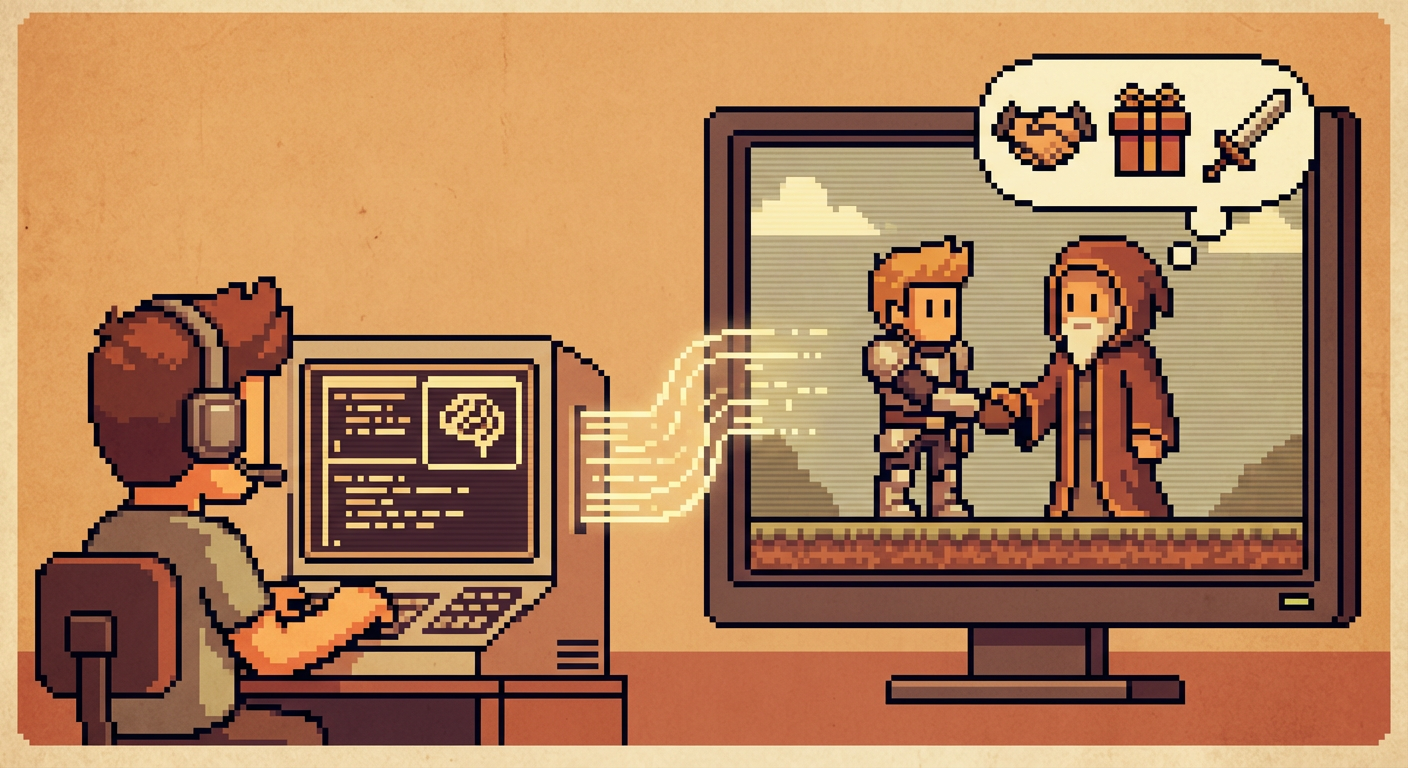
Imagine returning to your favorite RPG six months later. The shopkeeper remembers your previous conversations, asks about that quest you mentioned, comments on how much your character has grown since your last visit. These aren’t scripted interactions. They’re generated relationships that evolve based on your unique history with the game world.
The Inworld AI NPC platform and Convai are providing the infrastructure that makes this possible, partnering with AAA studios to embed sophisticated AI personalities into major gaming releases. This isn’t supplementary content. It’s game design evolution happening in real time.
Players say they feel more invested in game worlds where NPCs acknowledge their existence beyond mechanical interactions. When the tavern keeper remembers your favorite drink or the guild leader references your past heroic deeds in casual conversation, the game world feels alive in ways we’ve never experienced before.
The Future of Digital Relationships
We’re watching the early stages of a fundamental shift in how humans interact with digital entities. AI companions aren’t replacing human relationships for most users, but they’re filling gaps that traditional social structures often leave empty.
For night shift workers, people in remote locations, or those managing social anxiety, AI companions offer consistent emotional availability without the mess of human schedules and moods. They’re patient tutors, enthusiastic supporters, and reliable confidants rolled into accessible digital packages.
The technology will only get better. Voice synthesis, emotional intelligence, and memory systems continue improving rapidly. Future AI companions might be indistinguishable from human conversation partners in many contexts. That raises some pretty wild questions about the nature of relationships themselves.
Gaming communities are at the front lines of this evolution, experimenting with new forms of digital companionship and pushing boundaries of what’s possible in virtual relationships. The conversations happening in our community today will help shape how society navigates AI companionship tomorrow. What are your experiences with AI companions? How do you see this technology affecting gaming and social interaction? Drop your thoughts in the comments and let’s figure out this brave new world of digital relationships together.
Updated on March 9, 2026
The Indie Revolution Is Here: How Small Studios Are Rewriting Gaming’s Future in 2026
The Numbers Don’t Lie: Indie Gaming Has Exploded
Walk into any conversation about gaming in 2026, and you’ll hear the same thing: indie games aren’t just surviving, they’re thriving. The platform itch.io alone now hosts nearly one million games. That’s a staggering number when you think about all those creators working in bedrooms, coffee shops, and co-working spaces worldwide. This isn’t just growth. This is a complete shift in how games get made and who gets to make them.
The traditional gatekeepers are losing their grip. Big publishers used to decide what stories got told and which voices got heard. Now, anyone with a laptop and an idea can reach millions of players. The democratization of game development isn’t coming anymore, it’s already here, and it’s reshaping everything we thought we knew about the industry.
One Developer, Millions of Players: The New Reality
Remember when solo developers were considered cute curiosities? Those days are dead and buried. Games like Balatro have proven that single-person studios can capture massive audiences and generate millions in revenue. These aren’t flukes or lottery wins. They show us a new reality where creativity and vision matter more than team size or marketing budgets.
The success stories keep piling up. Developers who might have spent years pitching to publishers are instead building direct relationships with their communities. They’re releasing games that reflect personal experiences, experimental mechanics, and bold artistic choices that would never survive a corporate committee. The result? A gaming landscape more diverse and innovative than ever before.
This shift has created a ripple effect throughout the industry. Major publishers are scrambling to capture indie talent, while platforms compete to offer better revenue splits and promotional opportunities. The power dynamic has completely changed, and it’s not changing back.
Tools of the Trade: How Technology Leveled the Playing Field
Behind every indie success story is one thing: accessible development tools. The Godot Engine has become a game-changer in its fourth iteration, removing technical barriers that once required entire programming teams to overcome. Solo developers can now create polished, professional-quality games without needing computer science degrees or massive budgets.
But it’s not just game engines driving this revolution. AI-assisted asset generation has transformed development pipelines across the indie scene. Developers who once struggled with art creation can now generate placeholder assets, iterate on visual concepts, and even produce final artwork with unprecedented speed and quality. This technology isn’t replacing human creativity, it’s amplifying it.
The democratization extends beyond individual tools. Cloud-based development platforms, free asset libraries, and collaborative workflows mean that geographic location no longer determines access to resources. A developer in rural Montana has the same toolkit as someone in Silicon Valley.
Discovery in the Age of Abundance
More games means more noise, but it also means better discovery mechanisms. Game Pass and similar subscription services have become unexpected champions of indie titles, giving small developers access to audiences they could never reach through traditional marketing. These platforms actively seek diverse content to differentiate themselves, creating opportunities for experimental and niche games.
Steam Next Fest has turned into a phenomenon, regularly generating over two million demo downloads per event. This isn’t just marketing. It’s cultural programming that celebrates the creative process and gives developers direct feedback from potential players. The festival format has proven so successful that competitors are launching their own versions.
Social media algorithms, for all their flaws, have also created new pathways to visibility. A single viral clip can transform an unknown developer into an overnight sensation. The traditional PR machine still exists, but it’s no longer the only route to success.
The Community-Driven Future
What we’re witnessing isn’t just a trend. It’s a complete realignment of how creative industries operate. Indie developers aren’t just making games anymore. They’re building communities, creating relationships, and starting cultural movements around their work. The most successful indie titles in 2026 share a common trait: they emerge from genuine connections between creators and players.
This community-first approach has practical implications. Developers receive real-time feedback during development, build anticipation through transparent development processes, and create lasting relationships that extend far beyond individual game releases. The result is more sustainable careers and more meaningful creative work.
The challenges remain real. Market saturation makes visibility difficult. Development costs continue rising even with better tools. Mental health struggles plague overworked solo developers. But the opportunities have never been greater, and the community has never been more supportive of ambitious, original work.
The indie gaming revolution of 2026 is more than technological progress or market evolution. It’s a reminder that creativity and passion can still triumph in an increasingly corporate world. What trends are you seeing in your corner of the indie gaming community? The conversation is just getting started.
Updated on March 9, 2026
Beyond Text Adventures: How AI is Redefining Interactive Fiction
The Revolution Hiding in Plain Text
Interactive fiction died a quiet death in the 1990s. Or so we thought. While game developers chased photorealistic graphics and complex mechanics, something unexpected was happening in the humblest of gaming formats: text-based storytelling. The game-changer wasn’t better writers or improved game engines. It was artificial intelligence.
When AI Dungeon launched in 2019, it didn’t just bring back interactive fiction. It completely destroyed the rules that had defined the medium for decades. Built on OpenAI’s GPT-2 language model, this simple text game pulled in over two million users within months. Players weren’t picking from a menu of predetermined story options anymore. They were typing whatever they wanted and watching entirely new stories unfold.
The design implications blew my mind. Traditional interactive fiction forced writers to guess every possible player choice and write responses for each one. AI-driven games create responses on the spot, adapting to whatever weird thing you decide to type. This isn’t just better technology. It’s a complete rethink of what player choice can mean in story games.
Everyone Wanted In
AI Dungeon’s explosion created a whole ecosystem of competitors, each trying something different. KoboldAI went the open-source route, letting players run language models on their own computers. This solved a real problem: creative control. You could tweak the AI however you wanted without some company telling you what content was acceptable.
NovelAI creative writing positioned itself as a serious writing tool that happened to be great for interactive fiction. Their subscription model funded better AI training, which meant longer stories that actually made sense. They also added image generation, giving us a glimpse of what multimedia interactive fiction might look like.
Character.AI might be the biggest validation yet. Twenty million daily users, mostly doing roleplay scenarios. The platform’s success proves something important about what players actually want: when you give them the choice between polished-but-limited interactions and messy-but-unlimited possibilities, they pick freedom every time.
When D&D Meets ChatGPT
Here’s where things get really interesting. Solo tabletop RPG players started using language models as dungeon masters. These hybrid experiences combine the tactical complexity of traditional RPGs with AI’s narrative flexibility, and honestly, it works better than it should.
This setup shows why AI storytelling is so elegant. Video game AI has to work within strict mechanical limits, but an AI dungeon master can handle anything. Want to try something completely off-script? The AI rolls with it, keeping the story coherent while accommodating your wildest ideas.
These hybrid games also solve a scaling problem that’s plagued gaming forever. One AI system can run games for thousands of players simultaneously, each getting their own unique story. Instead of creating content, designers focus on training systems that generate compelling content. It’s a completely different skill set.
Why Visual Novels Should Be Worried
AI-generated stories pose a real threat to traditional interactive fiction. Visual novels and choose-your-own-adventure games depend on carefully crafted decision trees. Each branch represents hours of writing and design work. AI systems generate equivalent complexity in real time, no predetermined paths required.
This forces some uncomfortable questions about how we’ve been doing interactive storytelling. Why give players three carefully balanced dialogue options when they can type whatever response they imagine? Why limit outcomes to predetermined paths when AI can keep stories coherent across infinite possibilities?
The ripple effects go way beyond individual games. Adventure games, RPGs, simulations, they all use scripted NPC interactions. AI dialogue systems could replace those scripts with dynamic conversations that actually respond to how you’ve been playing. We’re talking about changing entire genres here.
The Art of Infinite Stories
What strikes me most about AI interactive fiction is how it changes what game design means. Traditional interactive fiction required you to be a writer, programmer, and UX specialist all at once. AI systems shift the focus to prompt engineering and training data. You become a conductor instead of a composer, shaping AI behavior through guidelines and examples.
This doesn’t make the creative work easier. If anything, it’s more challenging. Designing systems that generate compelling stories across infinite scenarios requires deeper understanding of narrative, character development, and player psychology than writing single fixed stories. The best AI interactive fiction feels effortless to play but represents incredibly sophisticated thinking behind the scenes.
The medium keeps evolving rapidly. Current problems with long-term memory, consistent world-building, and character development will probably get solved through technical advances. The more interesting challenges are the design questions that won’t go away: How do you balance player freedom with narrative satisfaction? How do you maintain dramatic tension when stories can branch anywhere? How do you create meaningful choices when every choice is possible?
I don’t have easy answers to these questions, but they represent the cutting edge of interactive storytelling. For creators willing to explore this space, you’re not just making games. You’re figuring out fundamental questions about player agency, narrative structure, and what happens when human creativity meets artificial intelligence in game design.

Updated on March 9, 2026
Diggygames — Games Worth Your Time
Diggygames — Games Worth Your Time
Reviews, guides, and coverage for players who take games seriously.
We’re gamers writing for gamers. No press-release regurgitation or corporate fluff here. Just honest coverage of games, the industry, and the weird culture we’ve all built around it. Whether you’re grinding ranked matches or hunting for your next indie obsession, we get it.
Topics we cover: Reviews · Guides & Walkthroughs · Esports · Indie Games · Retro · Industry

Updated on March 9, 2026
Cracking the Longevity Code: How Technology is Rewriting the Human Lifecycle
Hey there, fellow tech enthusiasts! Today, we’re diving into a topic that feels like it sprang straight from the pages of a science fiction novel—but it’s very much real and happening. Yes, I’m talking about longevity and how emerging technologies are promising to extend our time on this Earth. So grab your ethically-sourced coffee, sit back, and let’s geek out on the ways tech is stretching the human lifespan.
The Fountain of Youth Meets Silicon Valley
If someone told you fifty years ago that you’d be able to tweak human aging like adjusting the settings on your iPhone, they’d probably be met with polite skepticism. But here we are! Companies like Calico, a Google-backed venture, and Unity Biotechnology aren’t just dreaming about extending lifespan, they’re actually doing something about it. From genetic tweaking to AI-powered drug discovery, Silicon Valley isn’t just disrupting industries anymore. They’re taking on the relentless march of time itself.
I’ve spoken to a friend who works in biogerontology—yep, that’s actually a job—and she said something that stuck with me: “Aging is plastic. It’s a modifiable risk factor for disease.” Think about that for a second. Aging is something we can potentially control. For the longest time, the idea of growing old was like accepting gravity. You can’t escape it, so you might as well lean in. But the tech entrepreneurial spirit always says, “Well, why can’t we?”
The Science Behind Living Longer
So, how are they attempting to put the brakes on Father Time? It all starts at the cellular level. As we age, our cells deteriorate, but scientists have discovered senescent cells, often called “zombie cells,” that contribute massively to the aging process. It turns out these cells can be cleared out, paving the way for healthier tissue function. Unity Biotechnology is betting big on this by developing senolytic drugs designed to target and destroy these zombie cells. The geek in me can’t help but marvel at the possibility that a pill could one day add decades to our lives.
But wait, there’s more! Let’s talk about CRISPR. No, that’s not a cereal brand but rather a gene-editing tool that’s been causing quite the stir. This technology allows for precise modifications in the genome, effectively upgrading the blueprint of life. While ethical concerns do linger, and rightly so, it’s hard not to get excited about its potential to eliminate genetic diseases that plague our later years.
Breakthroughs and Skepticism: Your Mileage May Vary
If you’re anything like me, you’re probably wondering: “Okay, this sounds incredible, but what’s the catch?” Well, the reality is far from being all techno-utopian. Regulatory hurdles, ethical concerns, and sky-high costs loom large. Imagine the bidding wars for a potential ‘fountain of youth’ pill. It’s enough to make you wish Netflix would make a dystopian series about it (or maybe they already are?).
And while the allure of living longer is tempting, it comes with its own set of societal challenges. What’s the point in adding extra years if most of them are spent in poor health? The focus shouldn’t just be on ‘lifespan’ but also ‘healthspan’. There’s a growing consensus that we need more research focused on preventing age-related diseases like Alzheimer’s, arthritis, and heart disease. Those extra years need to be worth living.
The Future Awaits: Hold Onto Your Couches
Here’s where I let my imagination run wild for a bit. Fast forward a couple of decades, and maybe we’re former couch potatoes running marathons at 100 or starting new careers at 90 because why not? Society might just become more flexible than a Cirque du Soleil performer. We’ll have to redefine age categories. The new middle age could be 70, and retirement might be a concept as outdated as dial-up internet.
Tech firms aren’t the only players in this race against time. Governments and public health organizations will need to play a huge role to ensure that these advancements are universally accessible. Developing nations, in particular, could benefit tremendously, but the pathways need to be paved with care and equity.
Conclusion: A Future Turning Into the Present
So there we have it. The tech industry is getting its hands dirty with the complexities of human biology. As biohackers and scientists bend the rules of aging, I can’t help but feel a mixture of excitement and anticipation for what these advancements could mean for our lives, communities, and planet.
And honestly, isn’t that what the tech industry, and life, is all about? Challenging the status quo, imagining new possibilities, and diving headfirst into the unknown with a toolbox of algorithms, cell cultures, and a billion-dollar valuation? I, for one, can’t wait to see where this ride takes us, and I hope you’re as thrilled as I am.
Until next time, keep dreaming big and questioning everything. Who knows? Maybe one day, we’ll look back on these moments at our 150th birthday party and laugh about how young we once were. Cheers to whatever comes next!
Related: Gaming accessibility features: Past, Present, and Future

Updated on March 9, 2026
#Navigating the Quantum Realm: How Quantum Computing is Shaping Our Tech Future
Hey, tech explorers! Today, let’s embark on a journey into the quantum realm, a place where computing isn’t just about 1s and 0s, but a weird wonderland where traditional logic gets completely flipped on its head.
Before you roll your eyes thinking, “Quantum computing? Isn’t that still sci-fi stuff?” let me tell you, this tech is closer than you think. It’s not nearly as far-off as some make it sound. Grab your favorite caffeinated beverage and let’s dig into what quantum computing actually promises (and what it doesn’t).
What is Quantum Computing Anyway?
Great question! Quantum computing uses the bizarre properties of quantum mechanics. Classical computers work with bits, those 1s and 0s I mentioned. Quantum computers use quantum bits, or qubits, which can exist in multiple states at once thanks to something called superposition. Think of it like trying to solve a maze and being able to take every possible path simultaneously to find the exit. Pretty wild, right?
Qubits also have these quantum buddies called entanglement and quantum tunneling that make things even weirder. When qubits become entangled, changing one instantly affects another, no matter how far apart they are. And quantum tunneling? It’s like bits can slip through problems rather than having to solve them the hard way.
Recent Developments in the Quantum World
Just a couple of years ago, Google claimed they reached quantum supremacy. This means their quantum computer beat classical supercomputers on a specific task. Sure, that task might not have impressed anyone outside the quantum community, but it’s still huge. Like discovering fire in computing terms.
IBM and Rigetti Computing are also making serious moves. These companies are scaling their quantum chips and making them accessible to developers. You can actually play around with quantum circuits through cloud platforms like IBM Quantum Experience, though I won’t guarantee you’ll have any “aha!” moments right away.
Implications: The Good, The Bad, and The Quantum
The Good
Picture this: massive efficiency boosts across every field. Crack cryptographic codes in milliseconds. Design life-saving drugs in the time it takes to brew your morning espresso. Solve complex logistics puzzles instantly. It’s like giving society a brain upgrade.
Quantum computing could completely change materials science by simulating atomic interactions, leading to better superconductors and energy solutions. In AI, it might supercharge machine learning models by processing data at speeds we can’t even imagine right now.
The Bad
With great power comes great headaches. Quantum computing is the code-breaking monster that keeps cryptographers up at night. Current encryption methods protecting your emails and bank details? They might become useless once quantum computers get good enough.
There’s also the environmental question. Building and running quantum hardware takes serious energy, though people are working on solutions.
The Quantum!
Then there’s the completely unpredictable stuff, the applications nobody has thought of yet. That’s where things get really exciting… and maybe a little scary. Quantum tech forces us to rethink everything from data processing to legal frameworks.
Challenges Ahead for the Quantum Dream
While we’re dreaming big, there are some serious obstacles to overcome:
-
Error Rates: These systems are incredibly sensitive. A tiny temperature change or vibration can mess everything up. Error correction breakthroughs are coming, but we’re not there yet.
-
Commercial Viability: We have quantum prototypes, but mass production is still a fantasy. Remember when smartphones were giant, battery-hungry bricks? We’re waiting for quantum’s “iPhone moment.”
-
Talent: Quantum mechanics wasn’t exactly the most popular subject in school. We need way more people who actually understand this stuff.
Peering into The Quantum Crystal Ball
Looking ahead, quantum computing could democratize problem-solving like nothing since the internet. Imagine some genius in their garage creating breakthrough innovations powered not by regular computers but by personal quantum devices.
Governments, banks, and tech giants are pouring money into quantum infrastructure like it’s a gold rush. Except this time, the gold is qubits that could completely reshape how we think about technology.
Wrapping It Up: Are We Ready?
Here we are, possibly on the edge of something bigger than the Industrial Revolution. But like any major leap, it depends on whether we can adapt, learn, and maybe forget some of what we think we know about computing.
Will quantum computing solve world hunger, climate change, and Monday mornings? Probably not. But the potential here is real enough to get excited about, even if it all feels overwhelming and confusing.
Got thoughts or burning quantum questions? Hit me up in the comments! Until next time, stay curious and caffeinated.

Updated on March 9, 2026
Nuclear Fusion: The Power of Stars on Earth
Hey there, fellow tech enthusiasts! Today, we’re diving into nuclear fusion, that elusive particle party scientists have been chasing for decades. If the idea of generating clean, virtually limitless energy sounds like sci-fi to you, welcome to the club! But as we get closer to making this a reality, let’s figure out why nuclear fusion might soon be the star in our energy mix—and why I’m downright giddy about it.
A Quick Fusion Primer
Alright, let’s start with some fusion basics. Unlike nuclear fission, where atoms split apart (think classic nuclear reactors), fusion is all about joining forces. It’s like matchmaking at the subatomic level—imagine hydrogen atoms getting so cozy they form helium, releasing oodles of energy in the process.
Fusion happens naturally in stars, including our sun, which has been shining bright for billions of years thanks to this nifty trick. The challenge? Replicating those stellar conditions here on Earth, which requires temperatures of around 15 million degrees Celsius. Yes, that’s hot enough to toast marshmallows from a city block away!
The Recent Electric Buzz
Here’s where things get exciting: the past couple of years have brought huge leaps forward in the world of fusion. For starters, the experimental fusion reactor known as ITER (International Thermonuclear Experimental Reactor) in southern France is under construction and expects to achieve first plasma this decade. ITER is like the Olympics of simulating star stuff—tens of nations collaborating, billions pumped in, and all for the highest energy stakes.
And let’s not forget the savvy startups getting in on the fusion fun. Companies like Tokamak Energy and Helion Energy are racing toward the goal, each with their unique twists on magnetic confinement and pulsed power. There’s more innovation here than you can shake a space-wrought stick at.
The Sweet Science: Why It Matters
Why do we care so much about dialogue-worthy temperatures and techno-tinkering? Well, let me paint the picture: imagine powering cities without carbon by-products or the long-lived radioactive waste that comes with nuclear fission. With fusion, a small amount of fuel yields enormous energy surges, so we’re talking about a magical moment of minimal input for maximum output.
The potential environmental perks are as appealing as a double scoop of your favorite ice cream on a hot summer’s day. Fusion could completely change the energy sector with its ‘clean’ vibes, and it also gives us a shot at shrinking our carbon footprint while keeping the lights—literally and figuratively—on.
Challenges and Hiccups Along the Way
However dreamy, fusion isn’t without its techy trials. Achieving that insane heat requires machines more complex than deciphering my cat’s fickle dietary preferences. Even with advances like superconducting magnets and laser pulses, maintaining the reaction long enough to be commercially viable is like building a house out of sand at low tide.
Then there’s the financing and political coordination—both about as tangled as holiday lights after a messy takedown. Governments, corporations, and the scientific community need to harmonize, work past barriers, and, hopefully, learn to share new knowledge like kids on a good snack day.
Speculating into Tomorrow
Now, if I gaze into my crystal ball (or just my overly enthusiastic brain), I’d say we might witness practical fusion energy within the next few decades. Fair warning: optimism runs in my veins, washed down with a hefty dose of caution. We’ll likely first see fusion paired with other renewables to complement the grid’s stability.
Still, there’s an infectious buzz around fusion that could turn that speculation into ignition. Witnessing the collaboration, innovation, and imagination at play makes it hard not to hope for a future where fusion flickers in our homes and our planet thrives with sustainable energy.
Wrapping Up
If nuclear fusion were a character in an epic saga, it would be the underdog—a contender underestimated for years but poised to take the crown. Whether you’re a fusion fanatic or just curious about the journey, I say hop aboard because it’s going to be one heck of a ride.
As I sip my fusion-blended optimism smoothie (they’re delicious, trust me), I can’t help but feel delighted about the iconic eureka we’re tiptoeing towards. So next time someone doubts the power of innovation, just whisper, “Fusion!” and let the starry dreams spark up a conversation.
Thanks for hanging out in my tech nook. Until next time, stay curious, stay engaged, and keep an eye on those fusion flames. Who knows? Maybe we’ll all be toasting marshmallows over a fusion-powered firepit someday soon!
Updated on March 9, 2026
The Astounding Future of Robotics: A Journey Beyond the Sci-Fi Screen
Hey there fellow tech enthusiasts! Today, I’m bubbling with excitement to talk about a topic that often feels like it’s been plucked straight out of a sci-fi flick: robotics. Or, as I like to call it, the incredible world where silicon and dreams collide. Robotics is changing at rocket speed, and we’re just at the tip of the iceberg. So, tighten those virtual seatbelts as we explore what makes this field exhilarating — and a little quirky!
The Present: Robots Are Everywhere
Let’s start with a quick look at where things stand. Robots have crept into our lives to the point that they’re practically neighbors. Have you ever paused mid-aisle while a robot whirls past, restocking shelves? Or maybe you’ve squared off against your vacuum bot just to see it boogie away and leave the task half-finished? Yep, that’s the reality!
The Rise of Service Robots
Service robots are spreading like wildfire. In industries from healthcare to hospitality, automation drives efficiency. Imagine walking into a hotel and being greeted by a robot that offers you a berry smoothie, tailored to your taste, of course. It feels like magic, but no, it’s just today’s tech!
Companies like Boston Dynamics, with their algorithmically adventurous Spot and humanoid Atlas, have changed what we expect from robots. Their stunts make them YouTube stars, balancing nimbly on one leg like it’s no big deal. Who knew robots had better yoga skills than me?
Automotive Automation
Cars have been turning into robots on wheels. Thanks to companies like Tesla, features like autopilot aren’t just a dream anymore. While we haven’t hit the fully autonomous party as planned, the journey is unfolding with surprise milestones. Have you tried out a Tesla? It feels like whispering to the future through circuits and screen-glow.
The Challenges: Silicon Dreams Do Hit Reality
As jaw-dropping as progress has been, the land of robotics isn’t all rainbows and soldering joys. We have to navigate the maze of technical challenges, ethical puzzles, and even human fears. Let’s talk about some friction points robots and their makers face.
The Technical Tango
Let’s face it: Building robots is hard. It’s like trying to cram a schmoozy Terminator into a metal box without it getting grumpy. Designing systems that are efficient, safe, and adaptable is no small feat. Engineers take on this massive task of translating human intuition into algorithms that guide robotic actions. Not to mention the wild wonders of AI integration, where robots need to not just act, but think smartly.
The Ethical Labyrinth
Here’s another curveball: the ethics of robots replacing or complementing human jobs. This topic could spiral into a heated debate over coffee. Sure, robots can ease cumbersome tasks, but they can also unsettle the workforce dynamic. Think about it: instant grocery cart retrievers are cool, but do they edge out someone else’s job?
Then there’s the question of decision-making. Should robots have the ability to make life-altering choices in sensitive environments like hospitals? It’s stuff that makes you squint at legal textbooks while pondering the weight of silicon judgments.
The Human-Machine Dance
The irony of our robotic age is that humans still resemble curious kittens reacting to a flick of laser light. We humans are a strange breed, quick to express awe but equally quick to voice fear. Robots stir a mix of anticipation and anxiety, typical of any technological leap. It’s a journey paved with learning curves steep enough to occasionally trip over.
The Future: Where We’ll All Wear Tin Foil Hats… Or Maybe Not!
Alright, I’ll admit the “tin foil hats” line was clickbait-y. But let’s speculate boldly and responsibly about the road ahead.
Working Together
Big dreamers like Elon Musk have long touted the benefits of blending human and robot abilities for a push towards a more cooperative model. Musk’s Neuralink, something like dreams meeting databases, could change the interactive experience. Imagine communicating with your AI-smart home through mere thought. Sounds like some next-level mindmelt, right?
The Creative Frontier
Can we talk about creativity? Yes, robots are nosing into creative arts. AI-driven algorithms can generate symphonies, paint, and even write blogs like this one. There’s an ongoing quest to see if robots can work with, rather than compete against, human creativity. Perhaps, in the orchestration of our futures, we’ll author stories alongside mechanical muses. Imagine Shakespeare working with Siri! Now that’s a duo I’d love to see.
The Fourth Industrial Revolution
We’re on the brink of a Fourth Industrial Revolution, one where the blending of physical and digital worlds blurs our very perception. It’s a revolution not just driven by automation, but by connectivity and intelligence. Robots are key players, marching us into unforeseen territories. In this Phygital (get it? Physical + Digital) world, technology could become so built-in it becomes invisible, vanishing into the fabric of our daily lives.
Conclusion: The Ever-Enticing Dance of Innovation
As we stand on the edge of endless possibilities, let’s embrace the quirks, questions, and quantum leaps that come with robotics. It’s a thrilling ride, friends. A ride where we’re both driver and passenger, but hey, the driver is this really advanced automaton who insists you have peanuts on the trip!
It’s time to stop wondering if the robots are coming (spoiler alert: they’re here), and start imagining the wild future we can create together with these digital co-aliens called robots. Who knows? In the not-so-distant tech future, our mechanical pals might just help create realities we’ve only dreamed of. And that sound, right there, that’s the future knocking.
Till next time, keep your circuits charged and your curiosity bright!
Updated on March 9, 2026
The Rise and Reign of Quantum Computing: The Key to Our Utopian Future
Greetings, fellow tech enthusiasts! Today, we’re diving into the deep, mind-bending world of quantum computing—a sector that promises to be as revolutionary as it is bewildering. Imagine computers that don’t just crunch numbers but fold them into magical origami and unravel new dimensions of possibility. Pour yourself some coffee, as we’re stepping into the looking glass of computing.
A Quick Quantum Primer
So, what exactly is quantum computing? Picture traditional computers as extremely talented accountants—they do arithmetic, they love it, and they do it fast. But quantum computers? They’re more like philosophical mathematicians. They simultaneously juggle countless possibilities before offering solutions that could transform industries. While a classical computer processes bits in a binary system (ones and zeros), quantum computers use qubits, which—thanks to the wonders of quantum mechanics—can exist in multiple states at once. Mind-blowing, right?
Why It Matters: Real Problems, Real Solutions
The promise of quantum computing isn’t just speed—it’s the ability to tackle problems beyond the scope of classical machines. We’re talking about:
- Cryptography: Today’s encryption systems could become obsolete as quantum computers crack codes like eggs. This will drive the creation of even more robust encryption, protecting our data better than Fort Knox.
- Drug Discovery: Quantum computers could simulate molecular interactions at unprecedented scales, accelerating the development of new medicines. Imagine curing diseases faster than you can say “blockchain.”
- Optimization: Logistics, manufacturing, and even urban planning could see seismic shifts as quantum algorithms solve previously impossible problems.
Small Steps and Giant Leaps
While it’s all too easy to get caught up in utopian visions of our future with quantum computing, let’s not get too far ahead of ourselves. The tech is in its early stages—think of it as the awkward yet promising teenage phase of computing.
The Challenges Ahead
-
Scalability: Qubits are delicate darlings, easily disturbed by their environment (a pesky phenomenon known as “decoherence”). Getting more than a handful to work together remains a tough challenge.
-
Error Rates: These machines aren’t flawless. High error rates mean that quantum calculations need to be error-corrected—no simple task but one that clever minds are relentlessly pursuing.
-
Infrastructure: Current quantum systems require highly specialized environments, often chilled to temperatures colder than deep space. Seems the universe does have a chilling sense of humor.
The Dream Team
Companies like Google, IBM, and startups like Rigetti and D-Wave are at the quantum frontier, racing to turn these dreams into reality. Remember all those announcements about “quantum supremacy”? Marketing campaigns that burned brighter than new iPhone launches.
A Glimpse Into the Not-So-Distant Future
If we can navigate these obstacles (and I think we will), what’s next for quantum computing?
- Mainstream Integration: Picture a day when cloud-based quantum computations are as common as renting server space from Amazon Web Services. It won’t replace classical computing but rather work alongside it, forming a powerful duo.
- Industry Impact: From optimizing supply chains to mastering weather simulations, industries far and wide will tap quantum power to boost efficiency and innovation.
- Academic Renaissance: With quantum at the forefront, science and technology education will explode with new curriculums, driving a renaissance in academic research.
Quantum Ethics and Society: An Important Conversation
As with any powerful new technology, quantum computing races ahead with ethical questions in hot pursuit. Imagine the implications of instantly crackable encryption or AI systems boosted by quantum speed. We need to have these conversations now, not later, to make sure this technology helps everyone.
Conclusion: Embracing the Quantum Tomorrow
There you have it—a whirlwind tour of why quantum computing could transform our world in ways both grand and subtle. The road to quantum paradise is steep and full of challenges, but that’s what makes it exciting. With each advancement, we’re not just building more efficient machines. We’re redefining what’s possible.
Now, I’m curious—what excites you most about quantum computing? Are you picturing a new era of innovation or scribbling potential dystopian scenarios in your journal? Drop your thoughts; let’s geek out together. Until next time, keep dreaming, innovating, and perhaps storing a few extra qubits of coffee in reserve.