

When Numbers Tell the Whole Story
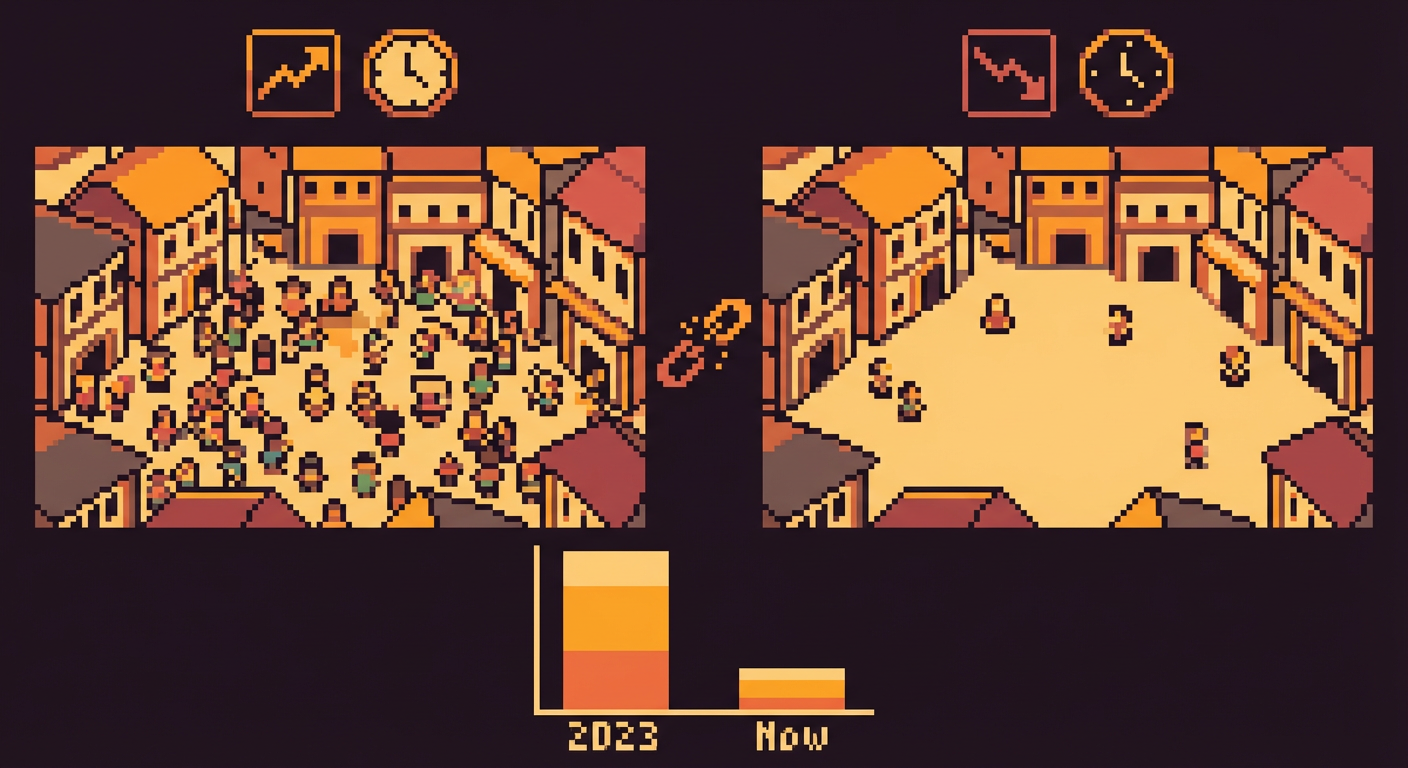
Sometimes the math hits harder than any critic ever could. Suicide Squad: Kill the Justice League started with 278,000 daily players on Steam. Eight months later? 11,000. That’s a 96% player drop that makes even the most brutal competitive game crashes look gentle. We’re talking about a Warner Bros. property losing nearly its entire audience faster than most games lose their launch week buzz.

The Steam player count analytics paint a picture that’s become painfully familiar. Sharp launch spike, brief honeymoon period, then a cliff drop that would make a physicist weep. But here’s what makes this particular crash interesting: it shows exactly where live service philosophy breaks down when it hits player reality.
Warner Bros. didn’t mince words in their Q4 2025 earnings call. A $200 million write-down. Market oversaturation. Corporate speak for “we bet everything on red and the wheel landed on double zero.” But the real story isn’t in the boardroom aftermath. It’s in the design decisions that led to those empty servers.
The Live Service Trap: When Forever Games Forget the Game Part
Live service games should be digital campfires. Places where communities gather, stories evolve, and players find reasons to return every single day. The best ones understand this isn’t about content drops or battle passes. It’s about creating systems that make players feel like they’re part of something that grows and changes with their investment.
Suicide Squad’s biggest mistake was treating live service like a business model instead of a design philosophy. You can’t just slap progression systems onto a traditional action game and call it live service. The core gameplay loop has to justify endless engagement from day one. When your hook is “play the same missions with slightly different modifiers,” you’re not building a live service. You’re building a content treadmill with premium currency.
The industry data backs this up brutally. Newzoo live service market analysis shows the average game now retains just 8% of launch week players after six months. That’s down from 15% in 2023. Players are getting pickier, smarter, and frankly more ruthless about where they spend their time. The bar for “good enough” has been destroyed.
Design Lessons From the Wreckage
Every failed live service teaches us something valuable about what players actually want. Suicide Squad’s collapse highlights three critical design principles that successful games nail and failed ones completely ignore.
First: meaningful progression beyond numbers. Players don’t stick around for higher damage values. They stick around for new capabilities, fresh strategies, and evolving mastery challenges. The most successful live service games make you feel fundamentally more capable after 100 hours than you did after 10. Not just stronger. Smarter. More creative in how you approach problems.
Second: emergent social experiences. The games that maintain massive player bases create natural opportunities for players to become each other’s content. Whether that’s Destiny 2’s raid callouts becoming inside jokes or Fortnite’s building techniques spreading through playground iterations, lasting games turn players into co-creators of the experience.
Third: respect for player investment. This isn’t just about not deleting progress. It’s about making every session feel like it contributed to something larger. The worst live service games make players feel like they’re renting temporary access to borrowed toys. The best ones make players feel like they’re building something permanent in a world that remembers their contributions.
The Broader Industry Reckoning
Suicide Squad’s failure isn’t happening in a vacuum. The industry is going through its own correction moment. Live service launches dropped 43% in 2025 compared to 2024. Publishers are finally reading the room: players don’t want more live service games. They want better ones.
This shift represents something deeper than market saturation. It’s recognition that live service design is actually harder than traditional game development, not easier. Building systems that stay engaging for months or years requires understanding player psychology, community dynamics, and long-term motivation in ways that shipping a complete single-player experience simply doesn’t.
The human cost makes this lesson even more sobering. Rocksteady’s 120 layoffs in January 2026 represent talented developers paying the price for executive miscalculations about what players want. These aren’t just numbers on a spreadsheet. They’re industry veterans who helped create some of gaming’s most beloved experiences, now casualties of a business model that put engagement metrics over actual engagement.
What Success Actually Looks Like
The live service games that thrive in 2026 understand something their failed competitors missed. Longevity doesn’t come from content quantity. It comes from systematic depth that reveals new possibilities the longer you engage with it.
Look at the games players actually stick with. They’re not necessarily the ones with the most updates or the biggest marketing budgets. They’re the ones that make mastery feel like a journey worth taking. Where getting better at the game feels like becoming better at something that matters, even if it only matters within that digital space.
I think the future belongs to developers who respect both their players’ time and intelligence. Who build systems complex enough to support genuine expertise development but accessible enough that improvement always feels within reach. Who understand that the best live service games don’t keep players engaged through obligation, but through genuine curiosity about what they’ll discover next.
What’s your take on where live service design goes from here? Are we seeing the death of the model, or just its necessary evolution into something more sustainable? Drop your thoughts below and let’s figure out what lessons the next generation of developers should actually be learning from disasters like this one.