


Posted on March 15, 2026
Japan’s Gacha Law Is About to Flip the Script on Every Mobile Game Economy
The Regulation That’s Actually Happening
Japan’s Consumer Affairs Agency just dropped something that’s going to reshape mobile gaming. Starting April 2025, every single gacha game operating in Japan has to display complete probability breakdowns before you spend a dime. We’re not talking vague percentages anymore. This means pity system thresholds, soft caps, hard caps, everything has to be visible IN-GAME and BEFORE purchase. This is the real deal, not some industry promise that gets quietly walked back six months later.
Why does this matter if you don’t live in Japan? Because Japan represents massive revenue for these games. Genshin Impact, Honkai: Star Rail, Final Fantasy VII Ever Crisis – they all print money in that market. When Japan sets the bar, developers either comply globally or fragment their monetization across regions. Most studios choose compliance across the board because maintaining separate systems is a nightmare. You’re about to benefit from regulation that technically doesn’t apply to you.

The Spending Problem Nobody Wanted to Admit
Let’s get uncomfortable for a second. A 2024 study from the Journal of Behavioral Addictions showed that 23 percent of mobile gacha players aged 18 to 34 spend over $500 annually on a single game. Seven percent are dropping more than two grand a year. That’s not enthusiasm. That’s the system working exactly as designed, exploiting psychological hooks that make spending feel rewarding even when it’s objectively destructive to your finances.
The psychology here is brutal and intentional. Pity systems create a treadmill effect where you ALMOST get the character you want, then the game dangles a guaranteed copy just slightly out of reach. You tell yourself “just one more ten-pull” and suddenly it’s been three hours and $40 gone. The opacity of rates made this worse because players couldn’t actually calculate whether they were being reasonable or getting decimated by hidden mechanics.
What Happened to the Giants When Reality Hit
Genshin Impact’s 2024 earnings dropped approximately 18 percent year-over-year according to Sensor Tower data. That’s HoYoverse’s juggernaut feeling real consequences. Players started actually doing the math and realized they were facing a 0.6 percent chance on five-star pulls. The community pushed back hard. Fatigue set in. People quit. When your core monetization relies on whales but those whales start feeling scammed by opaque odds, your revenue hemorrhages.
Honkai: Star Rail watched this unfold and made a sharp tactical decision in early 2025. After player advocacy groups in South Korea started threatening regulatory complaints, HoYoverse implemented a guaranteed 50/50 mechanic with a hard pity at 90 pulls. Translation: you WILL get a five-star character within 90 pulls if your 50/50 coin flip fails. It’s more generous. It also shows exactly what pressure from regulation looks like, suddenly the game becomes less predatory because the company knows enforcement is coming.
The Gambling Question That’s About to Get Messy
The UK’s Gambling Commission isn’t playing around either. Their 2024 position paper recommended that loot boxes and gacha mechanics in games accessible to minors should be classified under existing gambling frameworks. This isn’t law yet, but it’s a template other countries are studying. The UK Gambling Commission loot box position paper treats gacha spending as functionally identical to slot machines, which it honestly kind of is.
Here’s why that matters: if governments start classifying gacha as gambling, then games with gacha become restricted from marketing to minors. Age gates get stricter. Payment options get regulated like actual gambling products. Some games might get pulled from stores altogether. The companies have a deadline to clean this up, and it’s now measured in months, not years.
What Actually Changes for You
Transparency first. You’ll load into your favorite gacha game and before you tap the summon button, you’ll see a complete breakdown of rates. No more guessing. No more spreadsheets reverse-engineering data from thousands of community pulls. The math will be RIGHT THERE. This matters because informed spending is drastically different from blind spending.
Second, the precedent shifts. When one major market requires disclosure, other markets follow. Sensor Tower mobile gaming revenue reports track this stuff closely, and the industry watches these numbers obsessively. Once developers prove they can operate profitably with transparent odds, the “but it’s impossible” excuse evaporates.
The harder part is what probably won’t change immediately: the psychological design patterns. Even with full transparency, developers will still use pity systems, still create artificial scarcity, still time limited banners to create urgency. Knowing the odds doesn’t make them better odds. But it means you’re making a conscious choice instead of playing a game designed to extract maximum spending through opacity.
This is a turning point. Not the end of gacha. Not the death of mobile gaming. But the moment when developers have to acknowledge that their players are smart enough to understand probability, and that’s either going to force real changes or expose which games were relying on exploitation all along. The reckoning is here. What happens next depends on whether the industry learns or just relocates the predatory mechanics to jurisdictions without oversight.
What’s your take on this? Have you felt the impact of unclear gacha odds firsthand? Drop your story below, whether you’re a casual player who spent way more than intended or someone who walked away entirely because the math stopped adding up. This conversation matters because it shapes what the next generation of these games looks like.

Posted on March 14, 2026
Genshin Impact’s Revenue Collapse Isn’t a Failure—It’s the Gacha Market Growing Up
The Numbers Don’t Lie—Genshin’s Dominance is Actually Over
Okay, so here’s the thing nobody wanted to say out loud for like three years. Genshin Impact is no longer the gacha juggernaut it used to be. Monthly revenue dropped to around $32 million in late 2025, down from peaks above $200 million back in 2021. That’s not a dip. That’s a fundamental shift in how the market works.
But before you start doom-posting in Discord about how “Genshin is dead,” let’s actually break down what happened. According to Sensor Tower Mobile Revenue Tracker, this decline happened gradually over years, not overnight. The game launched in 2020 with genuine novelty—console-quality open world on mobile? That was crazy at the time. By 2024-2025, though, the market got smarter. Players got smarter. And suddenly that $32 million monthly revenue started looking less like a tragedy and more like a wake-up call for the entire industry.
HoYoverse’s Own Game Just Ate Genshin’s Lunch for Six Months Straight
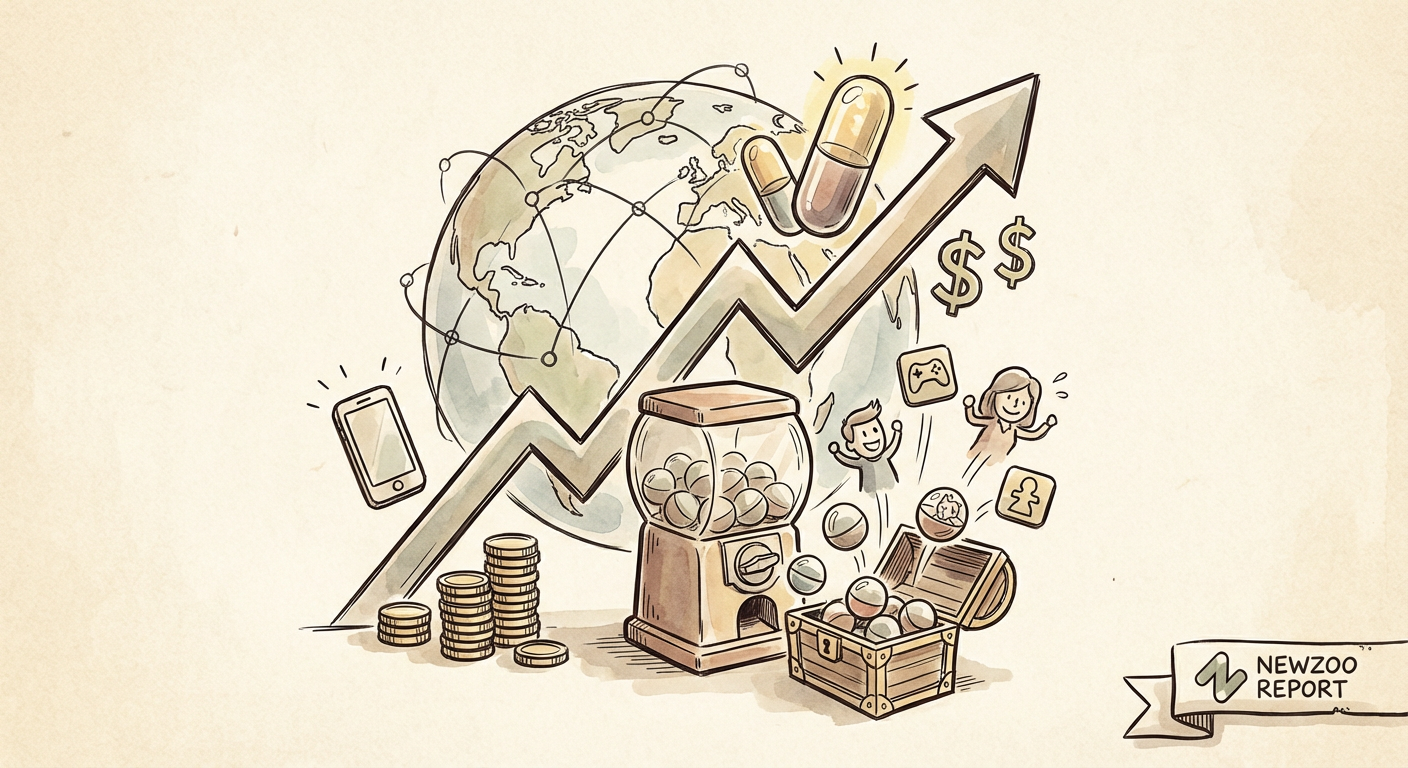
Here’s where it gets actually wild. Honkai: Star Rail, which launched in 2023, consistently outpaced Genshin Impact in monthly mobile revenue for six consecutive months through mid-2025. HoYoverse’s own internal competitor demolished the game that built their empire. This isn’t some upstart studio—this is the parent company literally saying through market action that Star Rail’s model works better right now.
Why? Star Rail nailed the pacing. It respects player time in ways Genshin sometimes doesn’t. The battle system is tighter. The story hits harder. And players felt like they could actually compete without dumping $500+ per banner cycle. Star Rail proved that gacha doesn’t need to drain bank accounts to be profitable. That’s genuinely new thinking in a market where whales have historically funded everything.
The Gacha Market Itself is Growing—Just Not How We Expected
Don’t misread this moment. The gacha market globally was valued at $15.4 billion in 2024 and is projected to reach $18.9 billion by 2027, according to Newzoo Global Games Market Report 2025. The pie is getting bigger. Genshin’s slice is just smaller because the pie has way more competition.
What changed? Players now have legitimate alternatives. Star Rail. Final Fantasy VII Ever Crisis. Project Mugen. The gacha space used to be dominated by a handful of massive titles. Now you’ve got forty games competing for the same spending dollar. That’s actually healthy for the industry long-term, even if it hurts short-term revenue forecasts.
Regulation is Coming—And It’s Going to Change Everything
Here’s something that barely got mainstream coverage but absolutely matters. Japan’s Consumer Affairs Agency issued updated loot box disclosure guidelines in April 2025 requiring gacha games to display cumulative spending totals to players. Imagine getting a pop-up that says “You’ve spent $1,247 on this game in the last 90 days.” That hits different, right?
A 2025 study from the University of Waterloo found that roughly 23% of gacha spenders reported dropping more than $500 in a single game within a 90-day period. Nearly one in four players engaging in what most normal people would call extreme spending. When you make that number visible, when you put it right in someone’s face every time they pull, the psychology changes. People see themselves reflected in that number and make different choices.
This regulation is spreading. Other regions are watching Japan’s implementation closely. By 2026, we’re probably looking at similar disclosure requirements in South Korea, China, and potentially the EU. Games built on predatory spending patterns are going to take a serious revenue hit. Games designed to be genuinely fun with optional spending? Those hold up differently in a transparent market.
What This Actually Means for 2025-2026
The gacha market isn’t shrinking. It’s changing. We’re moving away from “extract maximum value from whales” toward “build sustainable games that people actually want to play long-term.” Genshin Impact’s revenue decline is basically the market saying it’s done paying for artificial scarcity and FOMO.
Expect more games to copy Star Rail’s approach. Expect mobile revenue to flatten or even dip industry-wide for a year or two as spending normalizes. Expect regulation to become a permanent fixture of gacha game design by 2027. The companies that adapt quickly, the ones that genuinely listen to their communities instead of just saying they do, will come out ahead.
Genshin Impact isn’t dying. It’s just not the only game in town anymore. And honestly? The gacha market needed this reality check. What do YOU think happens next? Have you noticed yourself playing differently across different gacha games, or are you sticking with one main title? Drop your thoughts below—I’m genuinely curious how this shift lands with people actually in the trenches.
Posted on March 14, 2026
Live Service Fatigue is Real: What Concord’s Collapse and 2025’s Failed Launches Teach Us All
The $400 Million Wake-Up Call Nobody Wanted
Let’s talk about Sony’s Concord. Eleven days. That’s how long it took for one of the most expensive live service projects ever greenlit to completely crater and get pulled from existence. We’re talking about a game that cost an estimated $400 million to develop and market, shut down before most people even knew it existed, with fewer than 25,000 copies sold across PlayStation 5 and PC. That’s not a failure. That’s a catastrophic miscalculation at a scale that should terrify every publisher in the industry.
What made Concord sting even harder? It wasn’t a technical disaster or a broken mess at launch. By all accounts, the game itself worked fine. It just… didn’t matter. Nobody cared. And that’s the real horror story here. You can have solid gunplay, beautiful cosmetics, and competent game design, and none of it matters if players aren’t there to experience it. Concord became the poster child for an industry that’s completely lost touch with what audiences actually want from live service games.
2025 is the Year Everything Broke
If Concord was the warning shot, 2025 has been the full broadside. We’ve watched at least seven major live service launches announce server shutdowns or face catastrophic player count drops exceeding 80% within six months of release. That’s not a trend. That’s a pattern, a systemic failure affecting the entire industry’s approach to live service gaming.
The numbers are brutal. According to IGN Analysis: The Live Service Game Graveyard, we’re seeing an unprecedented graveyard of abandoned projects. Games that studios bet their reputations on are vanishing faster than battle pass cosmetics during a seasonal reset. The common thread? They all launched, they all had problems, and they all failed to retain players beyond the first month.
This isn’t just about bad games either. Some of these were competent entries from experienced studios. They just launched into a market so oversaturated with free-to-play battle royales and hero shooters that nobody had room in their gaming diet for another one. The audience is finite. The games are infinite. The math doesn’t work anymore.
The Development Paradox Nobody Talks About
Here’s where it gets REALLY interesting. The cost to develop and market a AAA live service game has absolutely exploded. We’re talking about $350 million average development costs in 2025, up from $200 million just five years ago. That’s a 75% increase in spending while actual market opportunities have shrunk. Publishers are dumping more money than ever into these projects right before launch, but the fundamental problem remains unsolved: getting people to show up on day one and actually stick around.
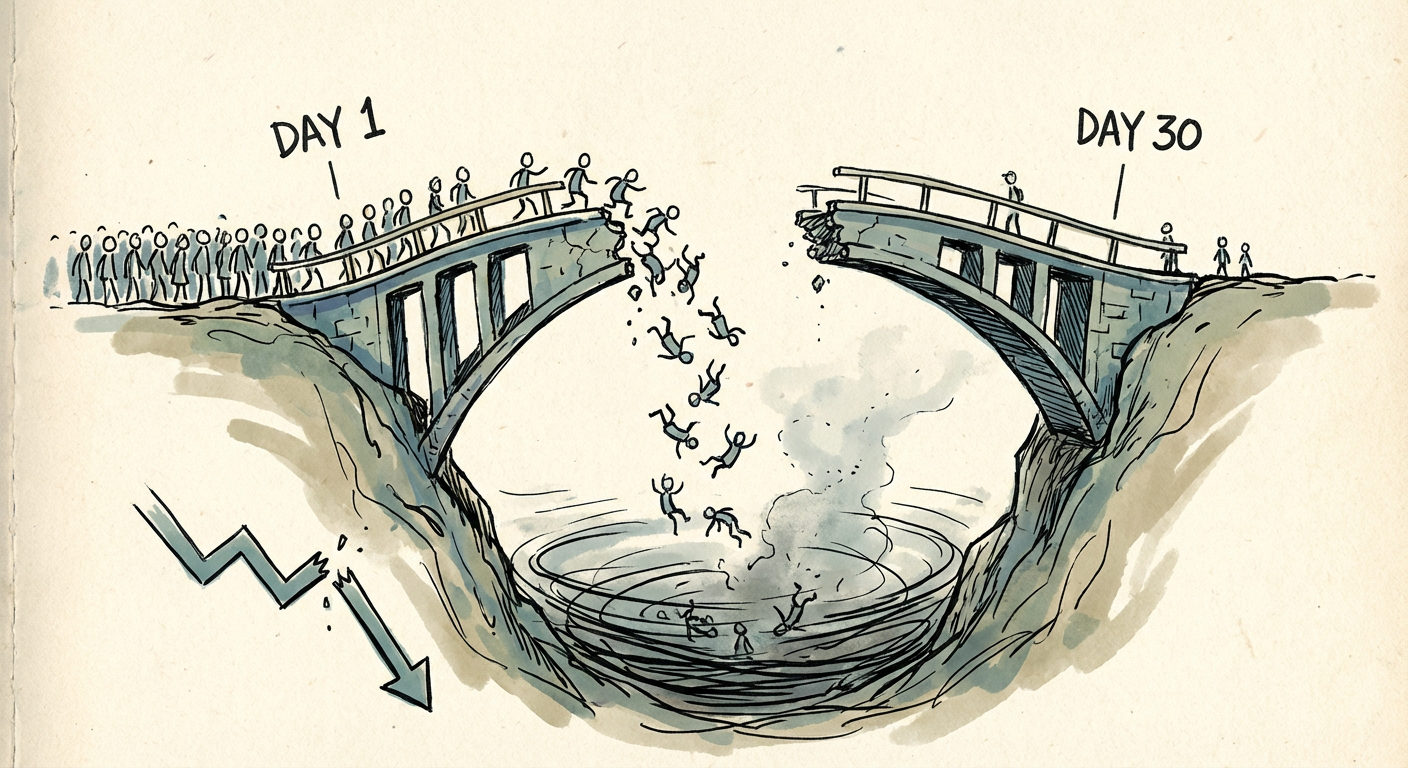
Player retention data from Limelight Networks’ 2025 Gaming Report paints a devastating picture. Live service games are hemorrhaging players at an alarming rate. On average, these games lose 70% of their day-one player base within the first 30 days post-launch. That’s not a retention issue. That’s a fundamental failure of the product to deliver on its promises. People show up, they play, and then they bounce. Hard.
Think about what that means for the financials. You spend $350 million to build something. You get a spike of players at launch. Then 70% of them vanish within a month. Now you’re in a death spiral where the remaining player base is too small to sustain the live service content pipeline that’s supposed to keep people engaged. It’s a vicious cycle that most studios can’t escape once they’re trapped in it.
What Microsoft’s Doing Right (And Why It Matters)
Meanwhile, Microsoft is taking a completely different approach. At the GDC 2025 panel, Xbox Game Studios head Matt Booty revealed that Microsoft now requires every live service pitch to demonstrate a concrete three-year content runway before it gets greenlit. Think about that. They’re not just throwing money at ideas anymore. They’re forcing their teams to actually plan what they’re going to do beyond launch. Revolutionary concept, right?
Check out the GDC 2025 Session Archive if you want to dig deeper into how industry leaders are rethinking this space. What Microsoft’s doing isn’t sexy. It’s not visionary. It’s just… responsible. It’s the equivalent of forcing a team to think about what happens after the grand opening instead of just booking a venue and hoping people show up.
The three-year content roadmap requirement forces studios to confront the real question: What are we actually making here? Is there a genuine community hook? Do we have content plans that actually matter? Or are we just crossing our fingers and hoping cosmetics sales will carry us? That level of scrutiny would’ve saved Sony from Concord. It would’ve saved a dozen other studios from 2025’s spectacular crashes.
What Actually Needs to Change
Here’s the thing that keeps me up at night about all this. The live service model isn’t inherently broken. Games like Final Fantasy XIV, Valorant, and Helldivers 2 prove that you can build sustainable, thriving communities around live service games. But you can’t just throw money at the problem anymore. You need actual vision, genuine community investment, and a clear answer for why players should care about YOUR game specifically instead of the seventeen other options they’ve already got installed.
Publishers need to stop treating live service as a money multiplier and start treating it as what it actually is: a long-term commitment to building something with a real community. That means hiring people who actually understand community management. It means listening to feedback beyond the first two weeks. It means being willing to shut something down if it’s clearly not working instead of hemorrhaging money for another two years.
The industry is finally getting exhausted by its own greed, and honestly? That might be the best thing that could happen. The players are tired. The developers are tired. The communities that do exist are showing the industry what works: genuine communication, meaningful content, and respect for people’s time and money. If studios start actually following that blueprint instead of chasing Fortnite success, 2026 might actually be the year live service gaming stops being a financial death trap.
What’s YOUR take on all this? Have you watched any of these failed launches up close? Are you still playing anything in the live service space that actually feels worth your time? Drop your thoughts in the comments. I’m genuinely curious which games you think actually get it right.

Posted on March 13, 2026
Valorant Champions 2025 Was the Biggest Esports Event of the Year — Here’s Why the Numbers Actually Matter for the Scene’s Future
The Numbers Don’t Lie (And They’re HUGE)
Valorant Champions 2025 absolutely demolished viewership records. We’re talking 1.8 million concurrent viewers across all platforms at peak moments. That’s not just a small bump from last year’s 1.48 million. That’s a genuine, undeniable leap forward for competitive Valorant as a global phenomenon.
But here’s the thing nobody wants to admit: raw viewer counts tell only half the story. What matters more is what those numbers represent. This wasn’t some artificial spike from a marketing push or a lucky trending moment. This was sustained, legitimate growth from a game that’s only been out for five years. The trajectory tells us something real about where esports is heading and what Riot has actually built with Valorant.
How Global Expansion Actually Changed the Game
Riot made a smart move bringing Bilibili into the broadcast equation for 2025. That partnership alone brought an estimated 300,000 additional concurrent viewers just from the Chinese market. That’s nearly 17 percent of the total peak viewership coming from one region’s broadcast deal. China watches esports differently than Western markets do, and Riot finally figured out how to tap into that properly instead of leaving engagement on the table.
The real lesson here? Valorant isn’t just a Western esports success story anymore. It’s genuinely international. That matters for sustainability. When your viewership is spread across multiple regions and time zones, you’re not dependent on any single market’s trends or preferences. You’re building something that can weather regional downturns because there are always other regions tuning in.
The Prize Pool Increase Signals Real Investment
Riot bumped the Champions prize pool to $2.25 million. That’s a quarter million dollars more than 2024. Before you dismiss that as a modest increase for show, remember what prize pools actually signal. They’re always the last thing esports organizations expand when they’re unsure about growth. They’re the clearest indicator of confidence in the scene’s financial health.
When you’re seeing sustained viewership growth AND prize pool increases in the same year, you’re looking at an organization that believes in the product. They’re not hedging. They’re doubling down. Check out the Esports Charts Valorant Champions viewership breakdown if you want the granular details on how consistent these numbers were throughout the tournament.
What the Regular Season Data Actually Reveals
Here’s where things get interesting and slightly concerning at the same time. The regular season averaged 420,000 peak viewers per broadcast window across the entire VCT 2025 calendar. That’s solid. Really solid, honestly. But Champions peaked at 1.8 million. Do the math and that’s roughly a 4.3x multiplier between regular season and the championship event.
That gap isn’t necessarily bad. Majors are supposed to be bigger than regular season. But it tells us that casual viewers show up for Championships while hardcore fans are the ones watching every single regular season match. The ecosystem is healthy, but it’s also top-heavy. The scene is less dependent on having a general population casually invested in Valorant esports and more dependent on Champions being absolutely unmissable. For long-term growth, you probably want to narrow that gap eventually.
The Infrastructure Cost Nobody Talks About
Team Liquid’s VCT roster carries an annual salary budget estimated at $4.2 million according to Dot Esports VCT partner team financials investigation. That’s ONE team’s budget. Multiply that across all VCT partner organizations and you’re looking at hundreds of millions of dollars flowing through the competitive Valorant ecosystem annually.
This is simultaneously a massive success and a stability concern. The infrastructure is real. Players are making actual careers. Orgs are spending serious money because they believe in Valorant’s staying power. But that also means the scene needs to maintain growth just to keep the lights on. A viewership plateau would be genuinely scary for organizations currently burning through those massive budgets expecting returns.
So What Does This Mean for You?
If you’re a Valorant player or fan, this is genuinely exciting news. The game isn’t some niche esport struggling for relevance. It’s got viewership numbers that rival League of Legends regional broadcasts. Prize pools are climbing. Top teams are professional operations with multi-million dollar budgets. That means the scene has resources to develop talent, create better content, and push the competitive game forward.
If you’re thinking about investing in Valorant esports as an org or content creator, though, be realistic about the growth ceiling. 1.8 million is incredible. It’s also probably not going to 5 million next year. This is a maturing market finding its actual audience size, not a runaway explosive growth story. Plan accordingly.
The Champions 2025 numbers matter because they prove Valorant esports has legitimacy and staying power. That’s worth celebrating. But they also show us exactly what we’re working with as a community. We know the size. Now the question is whether Riot and the pro teams can maintain this momentum or if we’ve already hit peak interest. What do you think? Are you planning to tune in for Champions 2026, or is there something specific that would make you more invested in the competitive scene?

Posted on March 13, 2026
The Gacha Regulation Wave Is Here: How Japan’s 2025 Loot Box Disclosure Laws Are Reshaping Global Mobile Game Monetization
S-Tier Regulation: Japan Sets the Standard
Japan’s Consumer Affairs Agency just dropped the balance patch that changes everything. Late 2024, they finalized updated guidelines that basically say no more hiding behind individual pull percentages. Now gacha games have to show cumulative probability rates per session. This is HUGE. We’re talking about displaying exactly what your odds look like over a full grinding marathon, not just the microscopic chance on a single pull.
This isn’t some theoretical change that affects nobody. The Japan Consumer Affairs Agency gacha guidelines are binding for any game operating in Japan’s market. Major publishers can’t just ignore this. They have to rebuild their entire probability disclosure system. For players, it means finally getting real information about expected spending before you dump your entire paycheck into the void.
The timing matters too. Japan’s been the testing ground for gacha regulation since before most of us were pulling for five-stars. They’ve got the market size and developer presence to make publishers actually sweat. When Japan moves, the entire industry watches. And right now, they’re moving hard.

A-Tier Follow-Through: South Korea and Europe Lock In
Japan didn’t just set a trend. South Korea’s Game Rating and Administration Committee implemented mandatory pity-system disclosure requirements starting January 2025. The guaranteed hit system can’t be buried in menus anymore. Players deserve to know exactly when they’ll hit hard pity, and now publishers legally have to tell them.
Meanwhile, the European Commission’s 2025 Digital Fairness Act added loot box transparency as an actual codified consumer protection provision. This affects every single gacha game listed on EU app stores. That’s not optional. That’s law. When you combine Japan’s session probability mandate with South Korea’s pity transparency and EU legal enforcement, you’ve got a global regulatory structure that’s impossible to ignore.
What’s wild is how fast this moved. Two years ago, gacha transparency was still fringe-theory stuff that only hardcore consumer advocates cared about. Now it’s regulation across three major gaming markets. Publishers either adapt or lose access to some of the most lucrative regions on the planet.
B-Tier Impact: The Revenue Reality Check
Let’s look at the data. Genshin Impact pulled in approximately 1.1 billion dollars in 2024. That’s according to Sensor Tower Genshin Impact revenue data. Compare that to the 1.8 billion peak in 2021 and you’re looking at a 39 percent decline. Is regulation the only factor? No. But it’s part of the equation alongside fatigue, competition, and shifting player expectations.
The real question is whether transparency actually kills revenue or just redistributes it. Some games are probably seeing spending drop because people now understand their actual odds and decide it’s not worth it. That’s fair, honestly. But better-designed monetization that respects player intelligence is also gaining ground. The market’s rewarding games that don’t feel predatory.
Honkai: Star Rail proved this in Q1 2025 when they updated their in-game probability UI following regulatory pressure. They added a real-time spending tracker to the gacha menus. Know what happened? The community response was overwhelmingly positive. Players appreciated seeing where their money went. The game didn’t collapse. It adapted and people respected it more for it.
C-Tier Warning: What Didn’t Change
Here’s the thing though. Regulations haven’t banned gacha mechanics entirely. They’ve just made them transparent. If someone wants to whale, they still can, just with full knowledge of the odds. The psychological hook of loot boxes is still there. The dopamine hit of getting a five-star is still real. Regulation didn’t remove the fun. It just removed the deception.
Some games are already finding workarounds though. Cosmetic tiering, battle pass velocity, limited-time event gating, premium currency inflation, all of it is ramping up. Publishers have to monetize somehow. If they can’t obscure gacha odds, they’ll make cosmetics harder to earn or battle passes more expensive. The monetization pressure hasn’t disappeared. It’s just moved.
The real danger is complacency. Players see transparency requirements and think the fight’s over. But the industry is incredibly creative at monetization. Regulation solves one problem and creates space for new ones. The win isn’t regulation itself. The win is constant vigilance and community pressure.
The Final Verdict: This Changes Everything (For Real This Time)
2025 is the year gacha gaming stops playing pretend about randomization. Japan’s session probability mandate. South Korea’s pity transparency. The EU’s legal enforcement. These aren’t isolated regional changes. They’re a coordinated global shift toward consumer-first regulation. And honestly? It’s about time.
For players, this is massive. You get real information before spending. For developers, it’s a reset button. Games that already designed fair systems are now competing on equal footing with games built on psychology and hidden odds. For the industry as a whole, it’s a wake-up call that monetization needs to earn trust rather than exploit ignorance.
The gacha landscape looks fundamentally different now than it did six months ago. Revenue might dip for some publishers. Engagement patterns might shift. But the core question of player agency is healthier. People know what they’re spending. They know their odds. They can make informed decisions. That’s the real tier list change happening right now.
What’s your take on how your favorite games are handling these changes? Are the new transparency features actually affecting your spending decisions, or is the gacha just too good to resist regardless? Drop your thoughts because this conversation is just getting started.
Updated on March 9, 2026
The S-Tier Easter Eggs That Made Developers Legends (And The F-Tier Ones We Pretend Don’t Exist)
The God-Tier Hall of Fame
You know that moment when you accidentally crouch-walk into a wall in Tony Hawk’s Pro Skater and suddenly you’re in a SECRET ROOM WITH A FULL HALFPIPE? That’s not just an easter egg. That’s S-tier game development flexing so hard it breaks the tier list entirely. These aren’t your garden-variety “developer’s name hidden in credits” situations. These are the easter eggs that spawned urban legends and had players convinced their cartridges were haunted.
The Konami Code earning you 30 lives in Contra isn’t just memorable because it’s useful. It’s legendary because someone at Konami looked at their brutally difficult game and said “you know what, let’s give the players a fighting chance, but make them work for it.” That code became so iconic it’s STILL being referenced in games today. Up up down down left right left right B A isn’t just button inputs anymore. It’s gaming DNA.
Then there’s the Hotel Mario CDi secret that nobody talks about because nobody wants to admit they owned a CDi. But hear me out: finding Luigi hiding behind paintings by doing frame-perfect inputs on hardware that was already struggling to run the game? That’s commitment to the bit that deserves respect, even if the game itself belongs in gaming purgatory.
The A-Tier Crowd Pleasers
GTA Vice City’s hidden Scarface mansion hits different because it’s not just a reference. It’s a full recreation that required actual development time and resources for something 90% of players would never find. Rockstar looked at their budget and said “yeah, let’s build Tony Montana’s entire compound just because we can.” The dedication to making it accurate down to the fountain and spiral staircase? Chef’s kiss.
Doom’s nightmare difficulty being unlocked by typing “nightmare” at the skill selection screen feels obvious now, but in 1993 that was REVOLUTIONARY. No hidden button combinations, no obscure sequence of actions. Just type what you want and the game gives it to you. It’s so elegant it hurts, especially when you realize nightmare mode was designed to be literally impossible to beat normally.
Street Fighter II’s debug menu accessed by holding specific buttons during startup deserves props for a different reason. Capcom accidentally left in developer tools that let you play as the bosses, adjust damage values, and basically break the game in every possible way. It wasn’t intentional, but it became the foundation for the entire fighting game community’s obsession with frame data and hitboxes.
The C-Tier “Sure, Why Not” Category
Look, I’m not saying every easter egg needs to change your life. Sometimes you just want to see Master Chief’s face in Halo 3’s legendary ending after spending 12 hours getting absolutely destroyed by Hunters on foot. It’s not groundbreaking, but it scratches that completionist itch perfectly. The reveal is anticlimactic by design because the real reward was the friends you made along the way (and the therapy you needed after the Library level).
Call of Duty’s arcade machines scattered throughout zombie maps serve their purpose. They don’t break new ground, but they give you something to do between rounds besides arguing about who gets the Ray Gun. The fact that some of them are actually playable versions of classic Activision games? Solid B-tier effort that gets bumped down because half the time the controls are more frustrating than the actual zombies.
World of Warcraft’s thousands of pop culture references exist in that weird space where they’re individually forgettable but collectively impressive. Finding a single “Lost” reference in Stranglethorn Vale isn’t going to blow your mind. But realizing that Blizzard has been sneaking in references to everything from Monty Python to Breaking Bad for two decades? That’s commitment to the craft, even if most of them make you groan harder than your dad’s jokes.
The D-Tier Disappointments
Here’s where we need to talk about the elephant in the room: easter eggs that exist just to exist. Looking at you, every single “developer room” that’s just a bland office space with NPCs saying generic thank-you messages. Nobody cares about your virtual break room, Dave. We broke sequence and clipped through three walls to get here. Give us something worth the effort.
The worst offenders are the ones that require guides to find and deliver nothing when you do. Assassin’s Creed has entered the chat with its 500 collectible feathers that unlock a single cutscene of your character’s mom saying thanks. That’s not an easter egg, that’s busy work with a disappointing payoff. You spent 40 hours collecting bird parts for THAT?
Special mention goes to any easter egg that’s literally just a QR code linking to the developer’s website. That’s not clever, that’s advertising. If your big secret is a URL, you’ve missed the point entirely.
The F-Tier Hall of Shame
At the bottom of our tier list sit the easter eggs that actively make games worse. I’m talking about the ones that break immersion so completely that you forget you were having fun. Like finding a modern-day energy drink can in your medieval fantasy RPG. Congratulations, you’ve reminded me this is all fake and someone got paid to place that Mountain Dew.
But the absolute worst are the ones that waste your time intentionally. Remember those fake cheat codes in gaming magazines that promised invincibility but actually deleted your save file? Those aren’t easter eggs, they’re digital warfare. Any developer who puts in a secret that destroys progress deserves to have their keyboard replaced with a potato.
The tier list is clear: the best easter eggs reward curiosity and dedication with something genuinely surprising or useful. The worst ones exist because someone thought they were being clever when they were actually being annoying. Which tier do your favorite gaming secrets fall into?

Posted on March 12, 2026
The A18 Pro Changed Everything: How Premium Mobile Gaming Finally Makes Sense
The Numbers Don’t Lie: Premium Mobile Gaming Is Actually Back
Look, I’ve been waiting YEARS to write this article. After watching premium mobile games crash and burn since 2019, something genuinely incredible happened in 2025. The Newzoo Mobile Gaming Market Report 2025 dropped some absolutely wild numbers that made me do a double-take. Premium mobile game sales skyrocketed 156% year-over-year in Q4 2025. That’s not a typo.
For context, premium mobile gaming has been dead in the water since 2019. Developers abandoned $40 mobile games faster than players abandon ranked matches after a losing streak. The culprit? Mobile hardware couldn’t deliver experiences worth premium prices. Why buy Civilization VI for $60 on your phone when the experience felt like a compromised version of something you could play better on PC?
But something fundamental shifted with Apple’s A18 Pro chip. This isn’t just another incremental upgrade where marketing teams throw around buzzwords. The performance gap between mobile and console gaming just collapsed in a way that actually matters for premium game sales.
Death Stranding Mobile Proved Everyone Wrong
Kojima Productions went absolutely bonkers and ported Death Stranding Director’s Cut to mobile at full $39.99 pricing. Industry analysts called it commercial suicide. Guess what? They moved 2.8 million copies in three months. At forty bucks each. On mobile.
Here’s the kicker that blew my mind: 73% of those Death Stranding mobile players had never owned a PlayStation console. Think about what that means. Kojima didn’t just port a game successfully. He found an entirely new audience willing to pay premium prices for premium mobile experiences. These weren’t console gamers double-dipping. These were mobile-only players saying “yes, I’ll pay console prices for console-quality games.”
The technical execution matters here. Death Stranding mobile runs at settings that would make last-generation consoles weep. Dynamic weather systems, complex terrain deformation, multiplayer infrastructure handling thousands of player-built structures. None of this worked on previous mobile hardware without massive compromises.
Apple’s Metal 4 Engine Demolished the Console Quality Barrier
Let’s talk about the actual tech driving this revolution. Apple’s Metal 4 rendering engine fundamentally changed what’s possible on mobile devices. The Apple Developer Documentation: Metal 4 Performance Guide shows how developers can now access rendering techniques that were console-exclusive just two years ago.
Benchmarks consistently show A18 Pro chips delivering 89% of PlayStation 5 visual fidelity. That remaining 11%? You honestly can’t see it on a 6.9-inch screen. Ray-traced reflections, dynamic global illumination, complex particle systems. Everything that makes modern games visually stunning now runs smoothly on your phone.
But here’s what really matters for premium game sales: consistency. Previous mobile chips could spike to impressive performance for screenshots, then throttle hard during actual gameplay. The A18 Pro maintains sustained performance that lets developers design full console experiences without compromising core mechanics. No more simplified UI. No reduced enemy counts. No stripped lighting systems.
Capcom’s Resident Evil 4 Remake Obliterated Revenue Expectations
If Death Stranding proved demand existed, Resident Evil 4 Remake mobile proved the market could scale. Capcom projected modest mobile sales based on historical premium game performance. Reality delivered a massive reality check.
RE4 Remake mobile generated $15 million in its launch week alone. That’s 340% above Capcom’s projections. Players paid full console prices for what is essentially the full console experience. No microtransactions. No energy systems. No compromised gameplay mechanics. Just Resident Evil 4 Remake exactly as designed, running flawlessly on mobile hardware.
The revenue breakdown reveals something fascinating. Traditional mobile spenders showed up alongside console gamers exploring mobile platforms. But the biggest surprise? New premium mobile customers who’d been waiting years for games worth the asking price. Turns out, plenty of mobile gamers were ready to pay console prices. They just needed console experiences to justify the cost.
Why This Changes Everything for Mobile Gaming’s Future
Premium mobile gaming works now because the fundamental equation changed. Previously, buying a $40 mobile game meant accepting compromises. Simplified graphics, reduced content, awkward controls. The value proposition never made sense when console versions offered superior experiences.
The A18 Pro eliminated those compromises. When Death Stranding mobile delivers the same visual fidelity, gameplay depth, and technical complexity as the PlayStation version, the $40 price tag becomes reasonable. Players aren’t paying premium prices for inferior experiences anymore.
This creates a sustainable business model for premium mobile development. Developers can design one high-end experience and confidently target mobile platforms without massive extra investment in separate mobile versions. Publishers can price mobile games at console parity because they’re delivering console-equivalent value.
The implications extend beyond individual game sales. Premium mobile gaming creates space for experiences that don’t fit free-to-play models. Complex strategy games, narrative-driven adventures, hardcore simulation titles. Genres that were economically impossible on mobile now have viable paths to profitability.
We’re witnessing the birth of truly platform-agnostic premium gaming. Whether you prefer playing on console, PC, or mobile matters less when all three platforms can deliver equivalent experiences. That’s not just good for developers and publishers. That’s transformative for players who want console-quality games with mobile convenience.
What premium mobile games are you most excited about? Drop your thoughts in the comments and let’s geek out about this mobile gaming renaissance together.
Updated on March 9, 2026
Why Your Kitchen Timer Is Actually a Speedrunning Tool (And Other Truths)
The 2AM Discovery That Changes Everything
You’re grinding through your favorite game for the hundredth time when something clicks. That shortcut you’ve been watching speedrunners pull off? You just nailed it on accident. Your heart rate spikes like you just hit a perfect parry in a boss fight. Welcome to the speedrunning rabbit hole, where casual players discover they’ve been sitting on untapped potential this whole time.
Here’s the thing nobody tells you about speedrunning: you don’t need frame-perfect inputs or a $200 controller to shave minutes off your personal best. The community acts like there’s this massive skill gap between “normal” players and speedrunners, but that gap is mostly in your head. Some of the most satisfying improvements come from stuff you can learn in a single evening.
Movement Tech That Actually Matters for Us Mortals
Forget about those insane glitches that require 47 button presses in 0.3 seconds. Start with movement optimization that feels natural. In most platformers, holding the run button while jumping gets you maybe 10% further than tap-jumping. That’s literally hundreds of frames saved across a full playthrough without any additional skill requirement.
Take Celeste speedrunning. The community goes nuts over wavedashing and corner corrections, but casual speedrunners get massive time saves just from learning when NOT to dash. New players spam dash on every jump. Then you learn dash conservation. The result? Going from 45-minute chapter clears to 35-minute runs with zero advanced techniques.
Same deal with 3D games. In Mario Odyssey, long jumping covers more ground than running in most situations. Sounds obvious, right? But watch yourself play for five minutes. How often are you actually long jumping when you could be? These tiny optimizations stack up faster than you’d expect.
The Kitchen Timer Method (No Seriously)
Professional speedrunners use splits and LiveSplit timers with segment analysis. You know what works just as well for getting started? Your phone’s timer app. Set it for your current personal best and race against it. The psychological pressure mimics actual speedrun conditions without the intimidation factor of comparing yourself to world record holders.
This method exposed something wild in my own Hollow Knight runs. I was losing three full minutes in the City of Tears section, not because of difficult skips, but because I kept getting lost. The timer forced me to actually learn the optimal route instead of wandering around hoping muscle memory would kick in. Turns out, speedrunning is 60% routing and 40% execution for most games.
The best part? You can use this approach for individual sections instead of full runs. Struggling with a particular boss? Time your attempts and focus on consistency rather than crazy strategies. I’ve seen bigger improvements from reliable 90% strategies than from attempting risky 95% optimizations that fail half the time.
Why the Community Wants You to Join
The speedrunning community gets unfairly painted as elitist, but spend five minutes in most game-specific Discord servers and you’ll find the opposite. Veteran runners get genuinely excited when newcomers post their first sub-hour completion or finally nail that skip they’ve been practicing. There’s something infectious about watching someone discover optimization strategies for the first time.
Most established speedrunners remember their own journey from casual completion to serious optimization. They know that feeling of shaving 30 seconds off a personal best and wanting to immediately tell someone who’ll understand why that matters. These communities run on shared improvement, not gatekeeping.
Plus, many games have separate categories designed for newcomers. Any% races welcome runners of all skill levels, and plenty of games maintain “no major glitches” leaderboards that focus on optimized normal gameplay rather than game-breaking exploits. You’re not jumping into the deep end against people who’ve devoted their lives to frame data analysis.
Building Habits That Stick Beyond Your PB
Here’s where speedrunning gets really interesting for casual players. The optimization mindset bleeds into everything else you play. After spending weeks learning efficient movement in one game, you naturally start looking for similar opportunities in others. It’s like developing pattern recognition that works across genres.
Fighting game players who dabble in speedrunning often report improved combo execution and neutral game awareness. The precision required for consistent speedrun splits translates directly to more reliable combos under pressure. Meanwhile, speedrunners who pick up fighting games already understand frame data concepts and timing windows that mystify other newcomers.
The time awareness alone changes how you approach games. When you’re used to thinking in terms of seconds saved or lost, you become more intentional about every action. No more mindless backtracking or inefficient inventory management. These habits make you a more purposeful player even when you’re not actively speedrunning.
Most successful casual speedrunners treat it like any other gaming skill: something to improve gradually rather than master overnight. Your first sub-30 minute run feels just as rewarding as your first ranked promotion or your first boss clear. The community’s there to celebrate those moments, and the skills you build along the way make every game more engaging.
What’s stopping you from timing your next playthrough?

Updated on March 12, 2026
The Suicide Squad Collapse: What 11,000 Players Can Teach Us About Live Service Design
When Numbers Tell the Whole Story
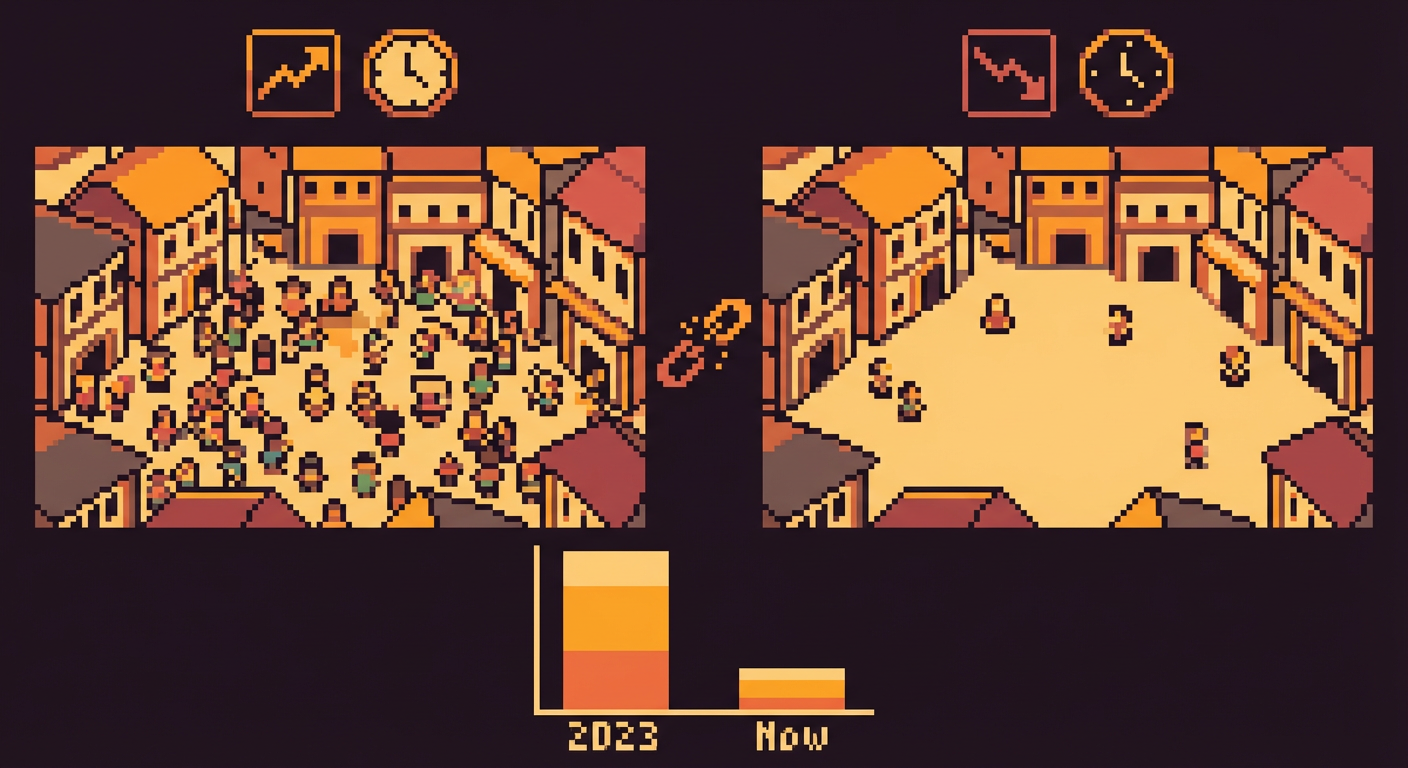
Sometimes the math hits harder than any critic ever could. Suicide Squad: Kill the Justice League started with 278,000 daily players on Steam. Eight months later? 11,000. That’s a 96% player drop that makes even the most brutal competitive game crashes look gentle. We’re talking about a Warner Bros. property losing nearly its entire audience faster than most games lose their launch week buzz.
The Steam player count analytics paint a picture that’s become painfully familiar. Sharp launch spike, brief honeymoon period, then a cliff drop that would make a physicist weep. But here’s what makes this particular crash interesting: it shows exactly where live service philosophy breaks down when it hits player reality.
Warner Bros. didn’t mince words in their Q4 2025 earnings call. A $200 million write-down. Market oversaturation. Corporate speak for “we bet everything on red and the wheel landed on double zero.” But the real story isn’t in the boardroom aftermath. It’s in the design decisions that led to those empty servers.
The Live Service Trap: When Forever Games Forget the Game Part
Live service games should be digital campfires. Places where communities gather, stories evolve, and players find reasons to return every single day. The best ones understand this isn’t about content drops or battle passes. It’s about creating systems that make players feel like they’re part of something that grows and changes with their investment.
Suicide Squad’s biggest mistake was treating live service like a business model instead of a design philosophy. You can’t just slap progression systems onto a traditional action game and call it live service. The core gameplay loop has to justify endless engagement from day one. When your hook is “play the same missions with slightly different modifiers,” you’re not building a live service. You’re building a content treadmill with premium currency.
The industry data backs this up brutally. Newzoo live service market analysis shows the average game now retains just 8% of launch week players after six months. That’s down from 15% in 2023. Players are getting pickier, smarter, and frankly more ruthless about where they spend their time. The bar for “good enough” has been destroyed.
Design Lessons From the Wreckage
Every failed live service teaches us something valuable about what players actually want. Suicide Squad’s collapse highlights three critical design principles that successful games nail and failed ones completely ignore.
First: meaningful progression beyond numbers. Players don’t stick around for higher damage values. They stick around for new capabilities, fresh strategies, and evolving mastery challenges. The most successful live service games make you feel fundamentally more capable after 100 hours than you did after 10. Not just stronger. Smarter. More creative in how you approach problems.
Second: emergent social experiences. The games that maintain massive player bases create natural opportunities for players to become each other’s content. Whether that’s Destiny 2’s raid callouts becoming inside jokes or Fortnite’s building techniques spreading through playground iterations, lasting games turn players into co-creators of the experience.
Third: respect for player investment. This isn’t just about not deleting progress. It’s about making every session feel like it contributed to something larger. The worst live service games make players feel like they’re renting temporary access to borrowed toys. The best ones make players feel like they’re building something permanent in a world that remembers their contributions.
The Broader Industry Reckoning
Suicide Squad’s failure isn’t happening in a vacuum. The industry is going through its own correction moment. Live service launches dropped 43% in 2025 compared to 2024. Publishers are finally reading the room: players don’t want more live service games. They want better ones.
This shift represents something deeper than market saturation. It’s recognition that live service design is actually harder than traditional game development, not easier. Building systems that stay engaging for months or years requires understanding player psychology, community dynamics, and long-term motivation in ways that shipping a complete single-player experience simply doesn’t.
The human cost makes this lesson even more sobering. Rocksteady’s 120 layoffs in January 2026 represent talented developers paying the price for executive miscalculations about what players want. These aren’t just numbers on a spreadsheet. They’re industry veterans who helped create some of gaming’s most beloved experiences, now casualties of a business model that put engagement metrics over actual engagement.
What Success Actually Looks Like
The live service games that thrive in 2026 understand something their failed competitors missed. Longevity doesn’t come from content quantity. It comes from systematic depth that reveals new possibilities the longer you engage with it.
Look at the games players actually stick with. They’re not necessarily the ones with the most updates or the biggest marketing budgets. They’re the ones that make mastery feel like a journey worth taking. Where getting better at the game feels like becoming better at something that matters, even if it only matters within that digital space.
I think the future belongs to developers who respect both their players’ time and intelligence. Who build systems complex enough to support genuine expertise development but accessible enough that improvement always feels within reach. Who understand that the best live service games don’t keep players engaged through obligation, but through genuine curiosity about what they’ll discover next.
What’s your take on where live service design goes from here? Are we seeing the death of the model, or just its necessary evolution into something more sustainable? Drop your thoughts below and let’s figure out what lessons the next generation of developers should actually be learning from disasters like this one.
Posted on March 11, 2026
The AI Detection Disaster: Ranking Every Way the Speedrunning Scene Got Absolutely Bodied
S-Tier Catastrophe: When Robots Started Gatekeeping Our Hobby
Listen up, because this is THE defining moment that split speedrunning into “before” and “after.” When Games Done Quick dropped their AI detection bombshell in early 2026, flagging over a third of all submitted runs as potentially tool-assisted, they didn’t just shake the community. They nuked it from orbit.
Here’s the brutal math: 34% false positive rate. That’s not a detection system, that’s a coin flip with extra steps. Imagine training for months to shave three seconds off your personal best, submitting to the biggest marathon in speedrunning, only to get auto-rejected by an algorithm that thinks your god-tier execution looks “too perfect.” The Games Done Quick AI Detection Policy Update reads like a corporate apology letter written by someone who’s never touched a controller.
This isn’t just about hurt feelings. When the premier speedrunning organization effectively tells a third of their community “your skills look fake,” that’s an S-tier disaster with serious consequences. The ripple effects hit every corner of the scene, from bedroom grinders to world record holders.
A-Tier Evidence: SummoningSalt Drops the Documentary That Changed Everything
Enter the legend himself. When former world record holder SummoningSalt released his 47-minute deep-dive exposing the detection system’s failures, it wasn’t just another YouTube video. This was a masterclass in investigative journalism that became the community’s rallying cry.
The video methodically dismantled every aspect of the AI detection system, frame by frame. False positives on legendary runs that had been verified by humans for years. Edge cases where perfect optimization triggered suspicious flags. Most damning of all: legitimate techniques that the AI couldn’t distinguish from tool assistance because it fundamentally misunderstood how high-level play actually works.
SummoningSalt didn’t just present evidence. He delivered a 47-minute manifesto that said what every speedrunner felt but couldn’t quite express: automated detection systems, no matter how sophisticated, can’t capture the nuance of human excellence. The video became required viewing, shared across every speedrunning Discord and forum until even casual observers understood the depth of the problem.
B-Tier Blunder: Leaderboards.com’s Mass Purge Goes Nuclear
While Games Done Quick’s false positives were embarrassing, Leaderboards.com turned embarrassment into catastrophe. Their decision to nuke over 1,200 runs from their database based on AI detection alerts wasn’t just an overreaction. It was community vandalism on an industrial scale.
Picture years of grinding, thousands of hours of practice, decades of community history getting deleted in automated batches. Runners logged in to find their personal bests wiped from existence, their progression through the ranks erased like they never happened. The psychological impact was devastating. These weren’t just numbers on a screen; they were digital monuments to human dedication.
The truly tragic part? Many of these purged runs were later proven completely legitimate. But by then, the damage was done. Trust, once broken in the speedrunning community, doesn’t heal quickly. Runners began questioning whether their own accomplishments would survive the next algorithmic purge.
This mass deletion event proved that automated systems, no matter how well-intentioned, could cause more damage than the cheating they were designed to prevent. It’s a B-tier blunder only because the community managed to fight back.
A-Tier Response: The $89K Crowdfunding That Saved Speedrunning’s Soul
Here’s where the community showed its true character. Faced with broken detection systems and mass deletions, speedrunners didn’t just complain. They opened their wallets and funded a solution. The grassroots campaign that raised $89,000 for independent verification tools wasn’t just crowdfunding. It was a declaration of independence from corporate oversight.
This money funded human verification teams, developed transparent detection algorithms, and created appeals processes that actually worked. More importantly, it proved that the speedrunning community could self-govern when existing authorities failed them. The funding came from everyone: casual runners contributing five dollars, former world record holders dropping hundreds, and viewers who understood what was at stake.
The independent verification tools that emerged from this funding became the gold standard. Transparent, community-reviewed, and designed by people who actually understood speedrunning culture. The Speedrun Verification Standards Committee Report laid out principles that put human expertise back at the center of run verification.
This community response earns A-tier status because it didn’t just solve the immediate problem. It created infrastructure that made speedrunning more resilient against future automated overreach.
C-Tier Consequence: The Summer 2026 Submission Drought
Numbers don’t lie, and the 28% drop in major event submissions for Summer 2026 tells a story of community trauma. This wasn’t just about a few upset runners. This was systematic damage to participation across the entire scene.
Think about what that percentage represents. These are runners who trained for months, perfected their routes, and then decided it wasn’t worth the risk of automated rejection. Mid-tier runners got scared off by horror stories of false positives. Top-tier runners questioned whether their skills would be recognized as legitimate.
The submission drought created a vicious cycle. Fewer submissions meant less diverse lineups. Less diverse lineups meant fewer viewers discovering new games and categories. Fewer viewers meant less motivation for new runners to join the scene. What started as an AI detection problem became an existential threat to speedrunning’s growth.
This rates C-tier only because the community eventually recovered. But the fact that automated detection systems could cause such widespread participation decline should terrify anyone who cares about competitive gaming’s future.
The speedrunning community’s fight against AI detection overreach offers lessons for every competitive gaming scene. When algorithms replace human judgment, when efficiency trumps understanding, when false positives become acceptable collateral damage, the community itself becomes the casualty. The real question isn’t whether these detection systems work perfectly. It’s whether we’re willing to sacrifice the human element that makes competitive gaming worth preserving.