

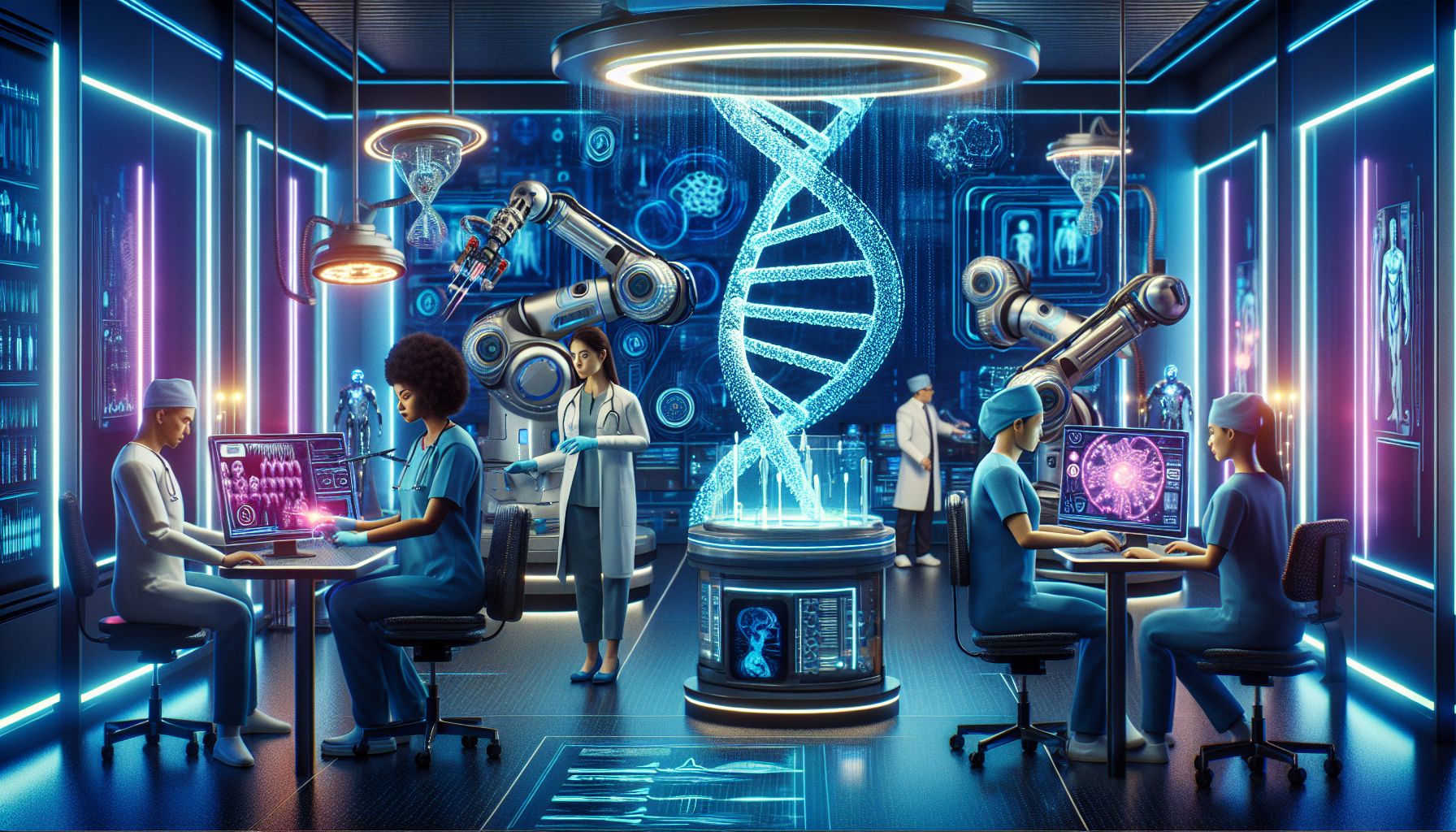
Artificial intelligence is moving incredibly fast these days, transforming entire industries and giving us a peek at what might be possible in the future. I wanted to focus on one area that really excites me: healthcare. In this post, I’ll explore how AI is changing modern medicine and bringing us closer to a future where detecting, diagnosing, and treating diseases becomes as precise as anything you’d see in science fiction.
The Dawn of AI in Healthcare
Just a few years ago, AI in healthcare was mostly academic talk. Researchers found it fascinating, but it wasn’t really happening in hospitals yet. Now? AI is actively changing how we care for patients, manage diseases, and run healthcare systems. Predictive analytics, personalized treatment plans, AI-powered diagnostics. It’s all here.
From Science Fiction to Medical Reality
The whole thing does sound like a sci-fi novel: computers helping doctors spot diseases, robots assisting in surgery, AI algorithms predicting health problems before they happen. Except this isn’t fiction anymore. It’s happening right now, in hospitals around the world.
Natural language processing and computer vision have reached a point where machines can detect diseases like cancer and diabetic retinopathy with accuracy that human doctors often can’t match on their own. AI algorithms are analyzing medical images and giving doctors a second opinion that’s both faster and sometimes more accurate than traditional methods.
The Breakthroughs Driving AI in Healthcare
Predictive Analytics: Catching Illness Before It Strikes
This might be the most exciting application of AI in medicine. By analyzing historical data and spotting patterns, AI can predict potential disease outbreaks or individual health risks. Instead of just reacting to problems, healthcare providers can actually prevent them. That could mean the difference between life and death.
AI systems can sift through massive datasets to figure out which populations face higher risks for certain diseases. Public health officials can then target their resources and prevention efforts more effectively. If you’ve ever wished for a crystal ball to predict your health issues, AI might be the closest thing we’ll get.
Personalized Medicine: Tailored Treatment Plans
AI is leading the charge in personalized medicine, which means treatment plans designed around each patient’s unique genetic makeup. By using data from genetic tests and electronic health records, AI helps doctors create treatment plans specific to each person’s needs. Better outcomes, fewer side effects.
The field of pharmacogenomics is getting a major boost from AI too. Machine learning algorithms can predict how different patients will respond to various drugs. The right patient gets the right drug at the right dose. It’s a huge step toward truly personalized healthcare.
AI in Surgery: Precision and Safety
Surgical procedures are getting a major upgrade from AI and robotics. Robotic surgical systems with AI can help surgeons work with extreme precision, cutting down on human error and speeding up recovery times. AI-powered tools give real-time feedback and insights during operations, which means better decisions when they matter most.
Take the da Vinci Surgical System. This robotic surgery system uses AI for minimally invasive surgeries, allowing for smaller incisions, less pain, and quicker recovery. The combination of human skill and AI precision is creating smarter, safer surgical options.
The Roadblocks to AI Integration in Healthcare
Of course, integrating AI into healthcare isn’t all smooth sailing. There are some serious challenges we need to tackle: data privacy concerns, ethical questions, and the need for extensive validation to make sure these AI systems actually work safely.
Ethical and Privacy Concerns
AI systems need huge amounts of data to work properly, which raises big questions about privacy and security. Healthcare data is incredibly sensitive. Protecting patient information isn’t just important, it’s everything. Making sure AI systems comply with regulations like HIPAA in the US or GDPR in Europe is an ongoing challenge that healthcare providers and tech companies are still figuring out.
Then there are the ethical issues, especially when AI gets involved in life-and-death decisions. The idea of AI making autonomous choices in healthcare settings raises moral questions that we’re still working through. This stuff needs careful thought and proper regulation.
The Need for Cross-disciplinary Collaboration
Getting AI to work in healthcare isn’t just a tech problem. It requires collaboration between healthcare providers, AI researchers, data scientists, and regulatory bodies. Everyone needs to work together to make sure AI systems are developed with a real understanding of both the technology and healthcare needs.
The Future of AI in Medicine: A Techno-Utopian Vision
So what’s next for AI in healthcare? The possibilities could transform our world in ways that would look utopian from today’s perspective. Here are some directions I think we might be heading:
Real-time Remote Monitoring
Wearable devices and smart sensors are getting more sophisticated, and with AI, these tools could provide constant health monitoring. This helps manage chronic diseases and reduces hospital readmission rates. Picture a future where your smartwatch alerts you to potential health risks before they become serious problems.
Global Health Equity
AI-driven solutions could help bridge healthcare gaps, especially in underserved regions. Cost-effective diagnostic tools and telemedicine solutions powered by AI can bring quality healthcare to remote and less affluent areas. It’s a chance to level the playing field and improve health outcomes globally.
Continuous Learning and Improvement
AI’s ability to continuously learn means healthcare systems can constantly evolve and get better. As AI systems process more data over time, they become more accurate in their predictions and more efficient in their processes. It creates a cycle of continuous improvement in patient care.
Conclusion
AI’s integration into healthcare represents one of the biggest technological shifts we’re seeing. Its potential to transform patient care, improve outcomes, and make healthcare more accessible is enormous. Yes, there are challenges, but the continued advancement and thoughtful implementation of AI technologies can bring us into a new era of medicine that embraces efficiency, personalization, and universal access.
The dawn of AI in healthcare promises a better tomorrow where cutting-edge technology and human expertise work together to achieve things we once thought impossible. It’s an exciting time for both tech enthusiasts and healthcare professionals as we move toward this future together.