
Why Most Co-Op Games Actually Suck at Being Co-Op
Look, I’m going to start with some hard truth here. Most games slap “co-op” on their Steam page and call it a day, but they’re really just single-player experiences with extra bodies running around. You know what I’m talking about. Those games where one person does all the puzzle-solving while everyone else stands around picking their nose, or where the difficulty scaling is so broken that adding a fourth player makes the game either trivially easy or impossibly hard.
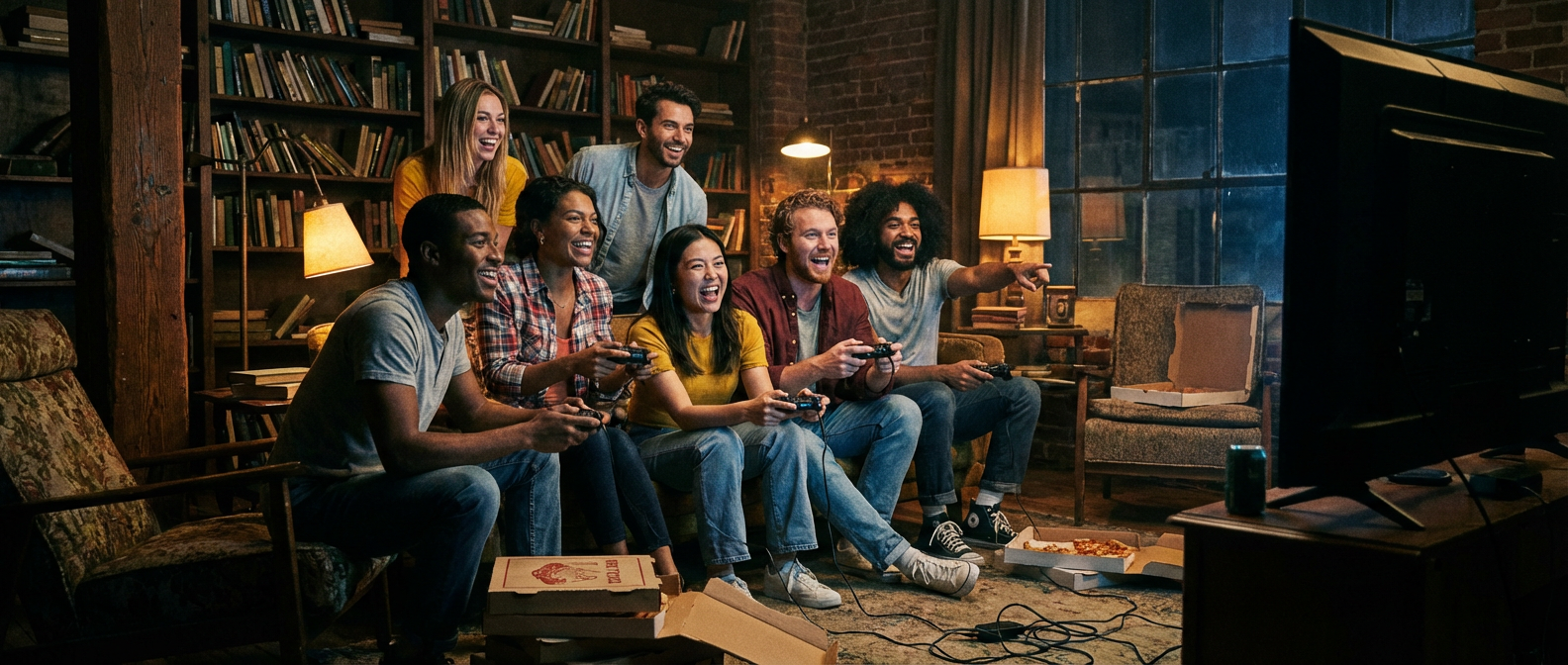
Real co-op design needs specific mechanics that make teamwork mandatory, not just the ability to see your friend’s character on screen. The best co-op games create moments where you genuinely need each other to succeed. Communication becomes essential, and everyone gets a meaningful role. These games create those legendary “remember when” stories your group will be talking about months later.
I’ve played through hundreds of co-op games with my crew over the years, and I can tell you right now that maybe 20% of them are actually worth your time and friendship. The rest are relationship destroyers disguised as party games. So let’s talk about the ones that get it right.
The Gateway Drug: Games That Convert Solo Players
Portal 2’s co-op campaign is the gold standard for introducing people to collaborative gaming. This isn’t just Portal with two players. It’s a completely separate campaign designed from the ground up for teamwork. Every single puzzle requires both players to think together, plan together, and execute together. There’s no carrying anyone here. If one person doesn’t understand the solution, you’re both stuck.
What makes Portal 2 brilliant is how it teaches communication naturally. You’ll start by just pointing at things with the ping system, but by hour three you’re having detailed strategy discussions about portal placement and timing. The game forces you to develop a shared vocabulary for problem-solving that extends way beyond just this one game.
Deep Rock Galactic takes a different approach but achieves the same result. Four dwarves, four completely different classes, one simple mission: mine stuff and don’t die. But the genius is in how those classes interact. The Engineer’s platforms mean nothing without the Scout’s mobility. The Gunner’s ziplines are useless without someone to cover him while he sets them up. The Driller’s tunnels save everyone’s bacon when things go sideways. Every class feels essential. Every player matters. Every mission becomes a story of barely organized chaos somehow working out.
The Friendship Stress Tests: Games That Demand Everything
Escape rooms are cute. Escape room video games with friendly AI that waits patiently while you think? Also cute. We Were Here Forever? That’s psychological warfare disguised as a puzzle game. This series splits your team across separate locations with only voice chat to coordinate. One person can see the solution, the other has to implement it, and neither has all the information they need.
I’m not exaggerating when I say these games will test your friendship harder than moving apartments together. You’ll discover which of your friends can give clear directions under pressure and which ones describe everything as “that thingy over there.” The games are ruthless about precision. One misunderstood instruction and you’re starting the puzzle over. But when you finally nail a sequence that’s been stumping you for twenty minutes? That shared victory hits different than any raid boss kill.
Raft lives in a similar stress-test category but with survival mechanics. Managing hunger, thirst, shark attacks, and resource gathering while coordinating base expansion sounds manageable until you’re three hours in and someone forgot to assign a water purifier operator while the rest of the team was out collecting palm leaves. The game creates natural role specialization that emerges from player preferences rather than rigid class systems. Some people become the builders, others the explorers, others the resource managers. It’s emergent teamwork that feels organic.
The Competitive Cooperators: When You’re Fighting Together and Apart
Here’s where things get spicy. The best competitive co-op games create scenarios where you’re working toward a shared goal while also trying to optimize your individual performance. Minecraft Dungeons sounds innocent enough until you realize that the good loot drops are limited and you’re all racing to grab the legendary gear while still needing to keep each other alive for the boss fights.
Risk of Rain 2 perfects this dynamic. The teleporter won’t activate until everyone’s ready, so you need the team. But the best items go to whoever finds them first, so you’re also racing against your teammates between monster waves. The tension between cooperation and competition creates this incredible push-and-pull where you’re simultaneously helping and hindering each other. When someone finds a legendary item, the whole team celebrates, and also immediately starts plotting how to get the next one.
Overcooked takes this concept and wraps it in a deceptively cute restaurant management game. You’re all trying to serve customers together, but when orders start backing up and the kitchen catches fire, suddenly everyone’s pointing fingers about who forgot to wash the dishes. The scoring system grades your collective performance, but individual mistakes become very visible very quickly. It’s the kind of game that creates inside jokes and running gags that your group will reference for years.
The Deep Cuts: Games Your Group Probably Hasn’t Tried
Moving Out deserves way more attention than it gets. It’s like Overcooked but for furniture removal, which sounds boring until you’re trying to coordinate getting a couch through a second-story window while your friend operates the crane and your other friend fights off angry ghosts. The physics are just wonky enough to be hilarious without being frustrating, and the level design consistently surprises you with new mechanical twists.
Spiritfarer in co-op mode transforms from a meditative single-player experience into something completely different. The second player controlling the cat creates this amazing dynamic where one person focuses on the big picture while the other handles the moment-to-moment details. It’s the rare co-op game that makes the experience more emotionally resonant rather than just more chaotic.
Tools Up is criminally underrated for groups that want something competitive but not stressful. You’re renovating houses together, but the instructions are deliberately unclear and the tools are shared resources. It creates this perfect storm of miscommunication that’s always funny rather than frustrating. The time limits are generous enough that failure feels like shared comedy rather than individual blame.
What co-op games have created the best memories with your crew? Drop your recommendations in the comments. I’m always looking for the next game that’ll have us shouting at each other in the best possible way.