

Our Digital Heritage Is Vanishing
Gaming culture faces a crisis that would make book burners blush. Recent research from the Video Game History Foundation reveals a shocking truth: 87 percent of classic video games have vanished into commercial oblivion. These aren’t just statistics on a spreadsheet. These are digital artifacts that shaped entire generations.
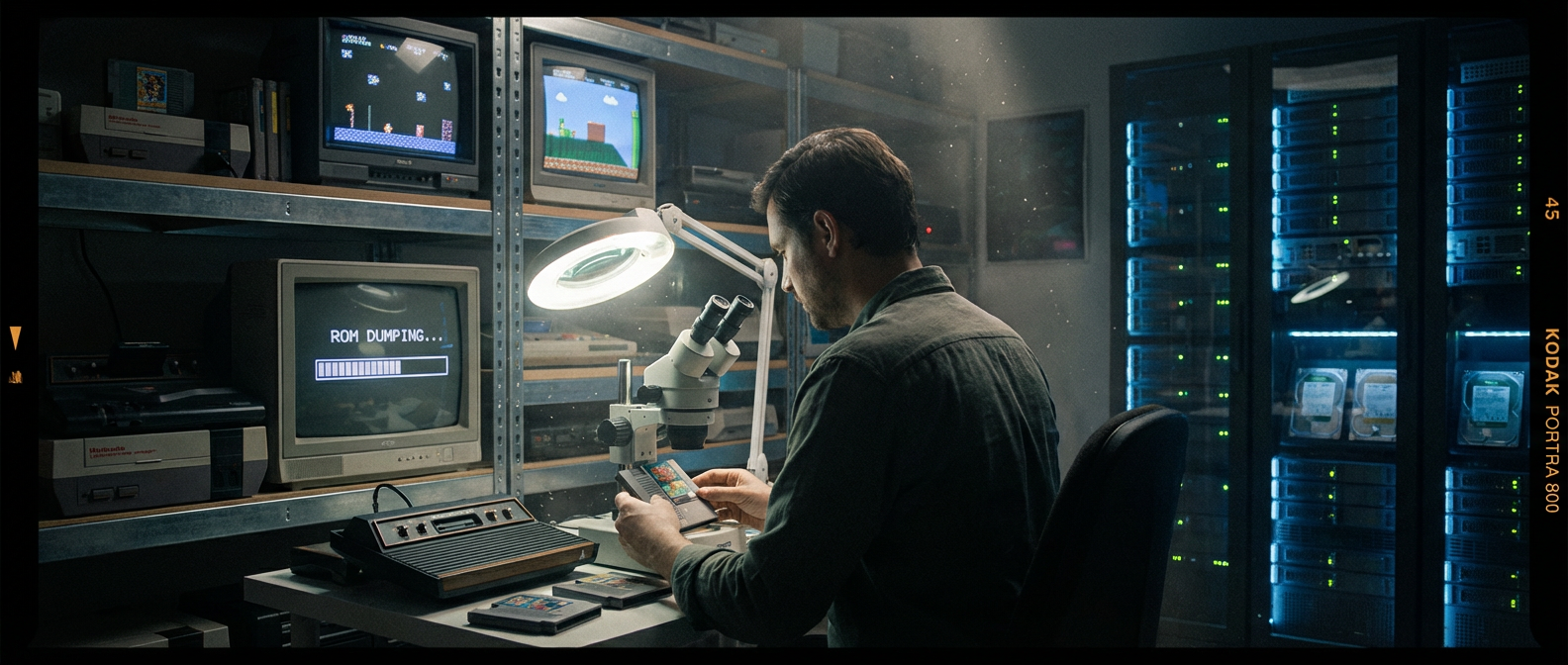
Think about it. Your favorite childhood platformer, that obscure RPG that kept you up all night, the weird experimental game that changed how you viewed interactive media. Chances are, they’re gone. Not destroyed, mind you. Just locked away in corporate vaults while legal departments wage war against anyone trying to preserve them.
This isn’t preservation. It’s cultural amnesia dressed up in copyright law. Meanwhile, corporations that couldn’t care less about their own history send cease-and-desist letters to fans who actually give a damn about keeping these games alive.
The Underground Railroad of ROMs
Enter the ROM preservation community. These digital archaeologists work in legal gray areas, scanning cartridges, dumping data, and making sure gaming history doesn’t disappear into the void. Sites like the Internet Archive games collection host thousands of playable vintage titles under DMCA exemptions that barely protect their work.
This community operates like an underground railroad for digital culture. They’re not pirates looking for quick profits. They’re preservationists fighting against time and corporate indifference. Every ROM they save is a small victory against the forces trying to erase our shared gaming heritage.
The irony is thick enough to cut with a pixelated sword. Companies that abandoned these games decades ago suddenly care deeply about their intellectual property when fans try to preserve what the market has forgotten. It’s like burning down libraries and then suing people for keeping books in their basements.
Nintendo’s War on Nostalgia
Nobody represents this backwards approach quite like Nintendo. The company that built its empire on innovative gameplay now seems more interested in wielding DMCA takedowns like a digital sledgehammer. Fan projects that celebrate Nintendo’s legacy get nuked from orbit. ROM sites hosting games from the Reagan era face legal threats that would make the yakuza proud.
Nintendo’s approach sends a clear message: they’d rather see their games disappear than let fans preserve them without permission. This isn’t about protecting current revenue streams. Most of these games generate zero income for Nintendo. This is about control, pure and simple.
The company occasionally throws fans a bone through their Switch Online service, drip-feeding classic games at a pace that would make geological time seem speedy. Meanwhile, entire libraries of incredible games rot in legal limbo because admitting they have value might complicate Nintendo’s next lawsuit.
Hardware Heroes and Legal Victories
Not everyone in the industry operates with such hostility toward preservation. The FPGA emulation market is exploding with devices like Analogue’s console recreations and the open-source MiSTer platform. These hardware solutions offer pixel-perfect accuracy for classic games while dodging some of the legal landmines that plague software emulation.
More importantly, the legal landscape is slowly shifting in favor of preservation. The Library of Congress expanded its DMCA exemptions for game preservation in 2024, recognizing that academic and cultural institutions need protection when saving digital artifacts. These exemptions aren’t perfect, but they’re a start.
The growing market for retro gaming hardware proves that demand for classic games isn’t going anywhere. Companies like Analogue are making serious money by giving people legal ways to play their old cartridges. Turns out respecting gaming heritage can be profitable. Who knew?
Publishers: Silent Partners in Cultural Destruction
While Nintendo grabs headlines with its aggressive tactics, most game publishers prefer a different approach: strategic silence. They won’t actively preserve their catalogs, but they won’t publicly attack preservation efforts either. This passive aggression might seem better than Nintendo’s scorched-earth approach, but the result is the same. Games disappear.
These publishers treat their back catalogs like toxic waste. Too dangerous to touch, too valuable to abandon completely. They’ll occasionally resurrect a franchise for a quick cash grab, but systematic preservation? That’s someone else’s problem. Preferably someone they can sue if necessary.
This industry-wide indifference to preservation creates an impossible situation for fans. Love a game enough to preserve it, and you become a copyright criminal. Let it disappear, and you’re complicit in cultural destruction. The only winning move, according to corporate lawyers, is not to play.
The ROM debate isn’t really about piracy or copyright law. It’s about who gets to decide which parts of our shared culture survive into the future. Right now, that decision rests with corporations that view gaming history as a liability rather than a treasure. The preservation community fights this digital book burning one ROM at a time, but they shouldn’t have to fight alone. What role will you play in keeping gaming’s past alive for future generations?